


There are some desserts that feel like a proper occasion, and classic sticky toffee pudding is one of them. A soft, moist sponge made with dates, drenched in a warm toffee sauce that soaks into every crumb, and served with custard or cream while it is still hot from the oven. It is the kind of pudding that makes people go quiet for a minute, because they are too busy eating to talk. It is not a light dessert. It is rich, sweet, and deeply comforting, and that is exactly what makes it so good. It is the pudding you make when you want everyone at the table to feel looked after.
I first had sticky toffee pudding in a small pub in the Lake District, on a cold, wet evening when I had walked further than I planned and arrived hungry and soaked through. The main course was good, but it was the pudding that I still remember. It arrived in a deep bowl, dark and glistening with toffee sauce, with a jug of hot custard on the side. One spoonful, and I understood why this pudding has been a favourite in Britain for generations. It was warm, sweet, and comforting in a way that felt like being looked after. I asked the waitress for the recipe, and she laughed and said it was a secret. It took me years of trying before I found a version that tasted the way that one did.
What I love most about this pudding is how the dates disappear into the sponge. If you have never made it before, the idea of dates in a cake might sound strange. But the dates are chopped and soaked in hot water until they are soft, and then they melt into the batter as it bakes, leaving behind a deep, caramel-like sweetness and a moistness that no other ingredient can match. You cannot really taste the dates themselves — what you taste is a rich, dark, almost toffee-like flavour that runs all the way through the sponge. It is the secret to why this pudding is so moist, and it is the reason it stays soft for days.
This is also a very forgiving recipe, which makes it a wonderful bake for anyone who is nervous about making puddings. If your sponge is a little uneven, the toffee sauce covers it. If you are not sure whether the pudding is done, the skewer test will tell you. If you do not have the exact tin the recipe calls for, a different one will work just as well. There is nothing complicated here, no technique that takes years to learn. You just need to soak the dates properly, cream the butter and sugar, and make a simple toffee sauce. I will walk you through every step, including the small details that make the difference between a good sticky toffee pudding and a great one, like soaking the dates until they are truly soft, and pouring half the sauce over the pudding while it is still hot.
Why You’ll Love This Sticky Toffee Pudding
The first reason is the flavour. Sticky toffee pudding is built from simple, deep flavours — dates, brown sugar, butter, and a little vanilla — and they come together into something that tastes far more interesting than the short ingredient list suggests. The dates give the sponge a dark, caramel-like sweetness, the brown sugar adds a molasses richness, and the toffee sauce ties everything together with a buttery warmth. Every spoonful has a little bit of everything: soft sponge, sticky sauce, and a deep, comforting sweetness that makes people close their eyes when they take the first bite.
The second reason is the texture. A good sticky toffee pudding should be soft and moist, with a fine, even crumb that soaks up the sauce without falling apart, and a top that is dark and sticky from the toffee. This recipe delivers both. The sponge is light because the butter and sugar are creamed properly and the dates keep it moist, and the sauce soaks in slowly, so every spoonful is soft and saucy. The contrast between the warm sponge and the cool cream or custard you serve it with is what makes every bite so satisfying, and it is the reason people keep going back for another helping.
The third reason is how simple it is. You do not need a stand mixer, a food processor, or any special equipment — a bowl, a wooden spoon, and a baking dish are really all it takes. The ingredients are things you probably already have in your kitchen, apart from the dates, and those are inexpensive and easy to find in any supermarket. From start to finish, you are looking at about an hour, and most of that is the pudding baking in the oven while you get on with something else. It is the perfect pudding for a quiet Sunday lunch, and it is simple enough to make even if you have never baked a pudding before.
And finally, it is a pudding that makes an ordinary dinner feel special. It does not need a special occasion — it is the occasion. Serve it after a simple roast dinner, or after a bowl of soup on a cold evening, and suddenly the meal feels like a celebration. It is also a wonderful pudding to make for guests, because it can be prepared ahead of time and warmed up just before serving, and it always impresses people, even though it is one of the easiest puddings you can make. If you are looking for one pudding recipe to learn properly and keep forever, this is a very strong candidate. And if you want another simple bake for a different day, this apple crisp with oat topping is a fruit dessert that is just as easy and feeds just as many people.
Ingredients You’ll Need
You do not need a long shopping list for this recipe, and that is part of its charm. Most of the ingredients are things you probably already have in your kitchen, and the few you might need to buy are inexpensive and easy to find in any supermarket. Here is what you will need, and why each thing matters.
For the sponge:
– 200g pitted dates, roughly chopped
– 200ml boiling water
– 1 teaspoon bicarbonate of soda
– 75g unsalted butter, softened, plus extra for greasing
– 175g light brown sugar
– 2 large eggs, at room temperature
– 175g self-raising flour
– 1 teaspoon baking powder
– 1 teaspoon vanilla extract
– A pinch of salt
For the toffee sauce:
– 100g unsalted butter
– 175g light brown sugar
– 200ml double cream
– 1 tablespoon golden syrup or black treacle
– 1 teaspoon vanilla extract
– A pinch of salt
To serve:
– Double cream, custard, or vanilla ice cream
The dates deserve a moment of attention, because they are the heart of this pudding. Use pitted dates — Medjool dates are the best if you can find them, because they are soft and sweet, but ordinary dried dates work just as well. Chop them roughly, not too finely, so they hold a little texture. The dates are soaked in boiling water with bicarbonate of soda, which softens them and helps them break down into the batter. This step is essential: if you skip it, the dates will stay in hard lumps and the sponge will be dry. Give them a full fifteen minutes in the hot water, and they will be soft enough to melt into the batter as it bakes.
The sugar matters more than you might think. Light brown sugar is the right choice for both the sponge and the sauce, because it has a gentle molasses flavour that white sugar does not have. That molasses note is what gives the pudding its deep, caramel-like taste. Dark brown sugar will work too, and it will give you a slightly darker, more intense flavour, but it can be a little overpowering. White sugar, on the other hand, will give you a paler, less interesting pudding. If you only have white sugar, the pudding will still work, but it will not taste quite as rich. It is worth buying a bag of light brown sugar for this recipe.
As for the flour, self-raising flour is the traditional choice for this pudding, and it gives you a light, even rise without any extra effort. If you only have plain flour, you can use it — just add two teaspoons of baking powder instead of one. The baking powder is important either way, because it gives the sponge its lift, and the bicarbonate of soda in the date soaking water adds a little extra rise as well. Make sure your baking powder is fresh — if it has been sitting in the cupboard for years, it may have lost its power, and your pudding will not rise properly.
How to Make Classic Sticky Toffee Pudding
Start by heating your oven to 180°C (160°C fan / 350°F) and preparing your dish. Grease a deep baking dish, about 20cm by 30cm, with butter. A ceramic or glass dish is ideal, because it holds the heat well and you can serve the pudding straight from it. If you only have a square cake tin, that will work too — just make sure it is deep enough to hold the sponge and the sauce. This step matters, because a pudding that sticks to the dish is a pudding that breaks, and no amount of toffee sauce will fix a broken pudding.

Put the chopped dates in a bowl and pour the boiling water over them. Stir in the bicarbonate of soda — it will fizz a little, which is normal — and leave the dates to soak for fifteen minutes. They will soften and swell, and the water will turn dark and syrupy. After fifteen minutes, mash the dates lightly with a fork. You do not need to mash them to a smooth paste — a few lumps are fine, and they will break down further as the pudding bakes. Set the bowl aside while you make the batter.
Put the softened butter and the light brown sugar in a large bowl and beat them together until the mixture is pale, fluffy, and light in colour. This is called creaming, and it is the most important step in the whole recipe. The beating traps tiny air bubbles in the butter, and those bubbles expand in the oven and give the sponge its light texture. Beat for a good three to four minutes — longer than you think you need to. The mixture should look almost light brown and feel soft and pillowy. If you have an electric mixer, use it. If you are doing it by hand with a wooden spoon, it will take a little longer, but it works just as well. Do not rush this step.
Add the eggs one at a time, beating well after each one. The mixture may look a little curdled after you add the eggs — that is normal, and it will come back together when you add the flour. Stir in the vanilla extract. Then sift the flour, the baking powder, and the salt into the bowl, and fold them in gently with a large metal spoon or a spatula. Fold means cutting down through the middle of the mixture, scooping underneath, and turning it over — not stirring in circles. You want to combine the flour without knocking out all the air you just beat in. Fold until you can no longer see streaks of flour, and then stop.
Now stir in the soaked dates, along with all their soaking water. The batter will look dark and quite wet — that is exactly right. The liquid from the dates is part of what keeps the sponge so moist. Stir gently, just until the dates are evenly distributed through the batter. Do not overmix. Spoon the batter into the prepared dish and smooth the top with the back of a spoon. Put the dish in the oven and bake for thirty to thirty-five minutes, until the pudding is risen, dark golden on top, and a skewer inserted into the centre comes out clean. Do not open the oven door for the first twenty-five minutes, or the pudding may sink.
While the pudding is baking, make the toffee sauce. Put the butter, brown sugar, cream, golden syrup, vanilla, and salt in a saucepan over medium heat. Stir gently until the butter has melted and the sugar has dissolved, then bring the sauce to a gentle simmer. Let it bubble for two to three minutes, stirring occasionally, until it has thickened slightly and turned a deep golden brown. Take it off the heat. The sauce will thicken a little more as it cools, so do not let it get too thick in the pan — it should pour easily, like single cream. If it thickens too much, stir in a splash of cream.
When the pudding comes out of the oven, leave it in the dish. While it is still hot, prick the top all over with a skewer, making holes about a centimetre apart. Then pour half the toffee sauce slowly over the top, letting it soak into the holes. The sauce will pool on the surface at first, but it will soak in as the pudding cools. Leave the pudding for ten minutes, then serve it warm, in deep bowls, with the remaining toffee sauce poured over each serving and a jug of hot custard or a spoonful of cream on the side.
Tips for the Best Sticky Toffee Pudding
Soak the dates properly, and do not rush them. This is the single most important detail in the recipe, and it is the one people are most tempted to skip. The dates need a full fifteen minutes in boiling water with bicarbonate of soda to soften properly. If you cut this short, the dates will stay in hard lumps and the sponge will be dry. The soaking water is part of the recipe too — do not drain it away. It is dark, sweet, and full of flavour, and it goes straight into the batter. Give the dates time, and they will reward you with a sponge that stays moist for days.
Cream the butter and sugar properly, and do not rush it. Three to four minutes of beating might feel like a long time, but it is what gives the sponge its light, tender texture. The mixture should be pale and fluffy. If you stop when it is still dark and dense, the pudding will be heavy. If you have an electric mixer, let it do the work. If you are beating by hand, put on some music and settle in — it is worth the effort. A properly creamed butter and sugar mixture is the foundation of a good sponge.
Do not overmix the batter once the flour goes in. This is the most common reason for a tough, heavy sponge, and it is easy to avoid. Fold the flour in gently, stop as soon as you can no longer see streaks of flour, and then leave it alone. Every extra stir knocks out a little more of the air you worked so hard to beat in. The same goes for the dates — stir them in gently, just until they are distributed. If you are worried about lumps, sift the flour before you add it.
Pour half the sauce over the pudding while it is still hot. This matters, because a hot pudding absorbs the sauce much better than a cold one. The syrup soaks down into the sponge through the holes you pricked, and as the pudding cools, the sauce sets into a sticky layer on top. If you wait until the pudding is cold, the sauce will sit on the surface instead of soaking in, and the top will be sticky rather than moist. Make the sauce while the pudding is baking, so it is ready the moment the pudding comes out of the oven. If you want to see how another cook approaches the same pudding, this sticky toffee pudding recipe from King Arthur Baking is a good reference.
Let the pudding rest for ten minutes before serving. This is not strictly necessary, but it makes a real difference. The sauce settles into the sponge, the pudding firms up slightly, and it holds together when you spoon it out. If you try to serve it straight from the oven, it can fall apart in the dish. Use those ten minutes to warm the custard or whip the cream. If you are looking for another simple bake for a different day, this lemon blueberry loaf cake is a similar loaf tin and a similar method with a different flavour.
Variations to Try
For a chocolate version, add two tablespoons of cocoa powder to the flour, and stir a handful of chocolate chips into the batter with the dates. The chocolate deepens the flavour of the pudding and makes it even richer. The toffee sauce stays the same. This version is particularly good served with vanilla ice cream, which melts against the warm pudding and creates its own sauce. It is a good option if you are cooking for people who love chocolate, and it is a nice change from the classic version.
For a ginger version, add a teaspoon of ground ginger and half a teaspoon of ground cinnamon to the flour. The spices give the pudding a warm, Christmassy flavour that is wonderful in the winter months. You can also add a tablespoon of finely chopped crystallised ginger to the batter with the dates. Serve it with a spoonful of whipped cream and a dusting of cinnamon on top. This version is particularly good around Christmas, when the house smells of spices and the pudding feels like part of the celebration.
For a lighter version, use half the butter in the sponge and replace the rest with a flavourless oil, and use low-fat cream in the sauce. The pudding will be slightly less rich, but the dates will still keep it moist and the toffee sauce will still provide most of the sweetness. You can also reduce the sugar in the sauce to 125g if you prefer a less sweet pudding. It will not set into quite as thick a sauce, but the flavour will still be wonderful. Serve it with a spoonful of Greek yoghurt instead of cream, which adds a fresh tang.
For a showstopper version, make the pudding in individual ramekins instead of one large dish. Grease the ramekins well, divide the batter between them, and bake for twenty to twenty-five minutes. Turn each pudding out onto a plate, pour the toffee sauce over the top, and serve with a scoop of vanilla ice cream. Individual puddings look beautiful, and they are a wonderful way to serve dessert at a dinner party. This sticky toffee pudding recipe from Nigella Lawson is another version of the same classic, and it is worth a look if you want to compare methods.
Serving Ideas
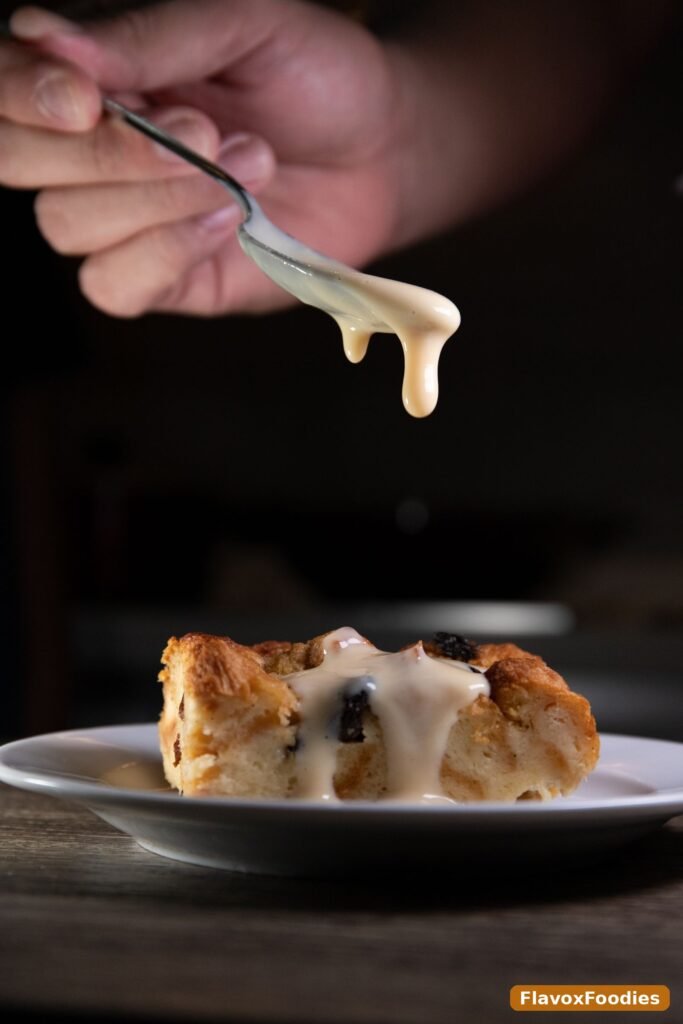
This pudding is at its best served warm, in a deep bowl, with hot custard poured over the top. The custard is the classic partner — its cool, creamy smoothness against the warm, sticky sponge is one of the great combinations in British cooking. Make the custard while the pudding is in the oven, so it is ready when the pudding comes out. A jug of custard on the table, so people can pour as much as they like, is the right way to serve it. If you do not have time to make custard, a tin of ready-made custard, warmed gently, is perfectly fine.
Double cream is just as good, and it is even simpler. A spoonful of cold double cream, poured over the hot pudding, melts slightly and mixes with the toffee sauce to make something wonderful. Vanilla ice cream is another excellent choice — the cold ice cream against the warm pudding is a lovely contrast, and it melts into the sauce as you eat. Any of the three works, and the choice is really a matter of what you have in the fridge and what you feel like. There is no wrong answer.
This is also a wonderful pudding to make for guests, because it can be prepared ahead of time and warmed up just before serving. Bake the pudding earlier in the day, let it cool, and keep it covered at room temperature. Make the sauce and keep it in the saucepan. Just before serving, warm the pudding in a low oven for ten minutes, warm the sauce gently, pour half the sauce over the pudding, and serve. It is far less work than it looks, and it always impresses people. If you are baking for a crowd, this peanut butter oatmeal bars recipe is another easy bake that travels well and feeds a lot of people.
Leftovers are wonderful, too. The pudding actually tastes better the next day, after the sauce has had time to soak right through the sponge. Keep it covered at room temperature for a day, or in the fridge for up to four days, and warm individual portions in the microwave for thirty seconds before serving. A warm slice with a cup of tea is one of the great simple pleasures, and it is worth the small effort. It is the kind of leftover that people actually look forward to, which is not something you can say about every dessert.
Storage and Reheating
Sticky toffee pudding keeps in an airtight container in the fridge for four to five days. It actually improves over the first day or two, as the sauce soaks deeper into the sponge and the flavours settle. Do not store it at room temperature for more than a day, because the cream in the sauce can spoil. If your kitchen is very warm, put it in the fridge as soon as it has cooled.
You can freeze sticky toffee pudding for up to three months. Let it cool completely, then wrap it tightly in cling film and then in foil, or put it in a freezer bag. You can freeze it whole or in portions — portions are more convenient, because you can take out just what you need. Freeze the sauce separately in a small container. Thaw both overnight in the fridge, then warm the pudding in a low oven and the sauce gently in a saucepan. The sauce may need a splash of cream to loosen it after freezing, but the flavour will still be excellent.
To warm a portion, put it in the microwave for thirty to forty-five seconds, or in a low oven at 150°C (300°F) for ten minutes. Do not overheat it, or the sponge will dry out. A warm portion with a spoonful of cream is one of the great simple pleasures, and it is worth the small effort. If you want to refresh a whole pudding that has been sitting for a few days, brush the top lightly with a little warm toffee sauce and warm it in the oven for ten minutes — it will taste almost as good as fresh.
Frequently Asked Questions
Why is my sticky toffee pudding dry?
The most common reasons are not soaking the dates long enough, overbaking, or overmixing the batter. The dates need a full fifteen minutes in boiling water to soften properly — if you cut this short, the sponge will be dry. Check the pudding at thirty minutes — if a skewer comes out clean, take it out, even if the top looks pale. Every oven is different, and yours may run hotter than the recipe assumes. And do not overmix the batter once the flour goes in, because that develops the gluten and makes a tough, dry sponge. If the pudding is already dry, serve it with plenty of warm toffee sauce and custard, which will add the moisture back.
Can I make sticky toffee pudding without dates?
The dates are what make this pudding what it is — they give the sponge its moistness and its deep, caramel-like flavour. Without them, you will have a different pudding, though still a pleasant one. If you cannot eat dates, you can replace them with an equal weight of chopped prunes or dried figs, soaked in the same way. The flavour will be slightly different, but the texture will be similar. If you want a date-free dessert, this easy vanilla mug cake is a much quicker bake that needs no dates at all.
How do I stop the toffee sauce from splitting?
The most common reason for splitting is heat that is too high. Make the sauce over medium heat, not high, and stir it gently until the butter has melted and the sugar has dissolved. Once it reaches a gentle simmer, let it bubble for just two to three minutes — no longer. If the sauce does split, take it off the heat immediately and whisk in a tablespoon of cold cream. It will usually come back together. Do not let the sauce boil hard, and do not leave it on the heat unattended. A little patience here makes all the difference.
Can I make sticky toffee pudding ahead of time?
Yes, and it actually tastes better the next day. The sauce needs time to soak right through the sponge, and the flavours settle overnight. Bake the pudding, let it cool completely, and store it covered in the fridge for up to four days. Make the sauce and keep it in a separate container. When you want to serve it, warm the pudding in a low oven for ten minutes, warm the sauce gently, pour half the sauce over the pudding, and serve with custard or cream. You can also freeze the pudding for up to three months — thaw it overnight in the fridge before warming it.
What should I serve with sticky toffee pudding?
Hot custard is the classic partner, and it is the one I recommend first. The cool, creamy custard against the warm, sticky sponge is one of the great combinations in British cooking. Double cream is just as good, and vanilla ice cream is wonderful too — the cold ice cream melts into the warm toffee sauce as you eat. Any of the three works. If you want something lighter, a spoonful of Greek yoghurt adds a fresh tang that cuts through the sweetness. A cup of tea or coffee alongside is the perfect finish.
Can I bake sticky toffee pudding in individual ramekins?
Yes, and it is a lovely way to serve it at a dinner party. Grease six ramekins well, divide the batter between them, and bake at the same temperature for twenty to twenty-five minutes, until risen and a skewer comes out clean. Turn each pudding out onto a plate, pour the toffee sauce over the top, and serve with a scoop of vanilla ice cream. Individual puddings look beautiful, and they are easier to serve than cutting portions from a large dish. Just remember to grease the ramekins very well, or the puddings will stick.



Pingback: Tres Leches Cake with Cinnamon Whipped Cream – FlavoxFoodies