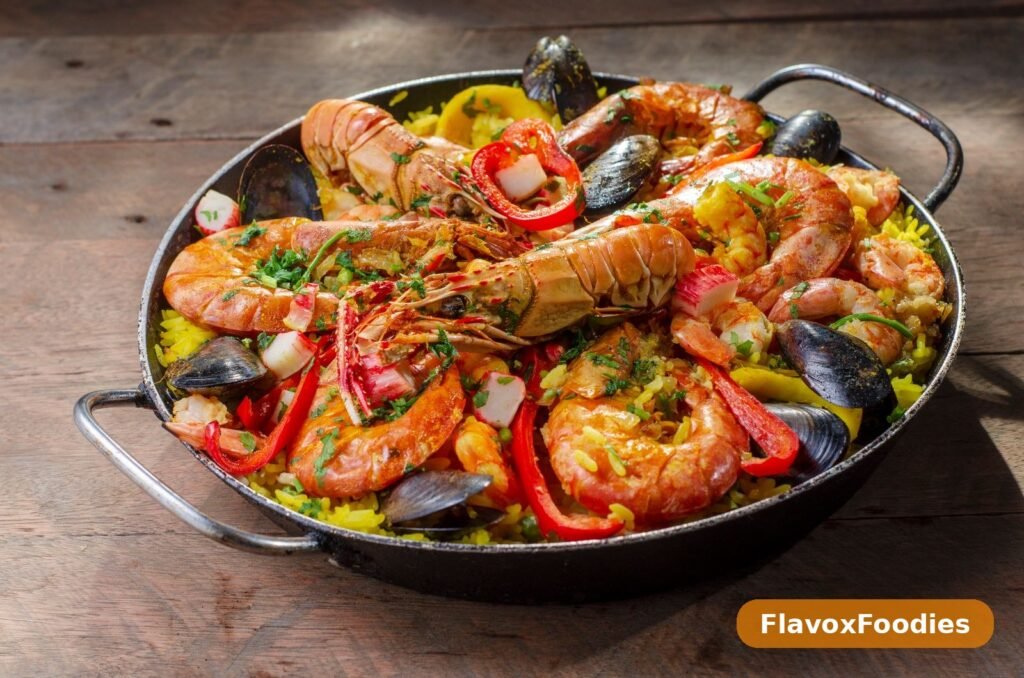

There is a particular kind of dinner I keep coming back to on busy weeknights, the kind where one pan does all the work and the whole kitchen smells incredible within about ten minutes of starting. This one-pan shrimp and chorizo paella-style rice is exactly that dinner. It has the golden saffron rice, the smoky chorizo, and the plump shrimp of a proper paella, but it asks for nothing fancy — no special wide pan, no open flame, no trip to a Spanish grocery store. Just a big skillet, a handful of honest ingredients, and about forty minutes.
I first made something like this on a Friday evening when I had shrimp in the freezer, half a link of chorizo left over from breakfast, and a bag of rice I kept meaning to use. I did not set out to make paella. I set out to use up what was in the fridge. But as the chorizo started rendering its paprika-red fat into the pan and the saffron went into the broth, the whole thing started smelling like a restaurant dish, and I realised I had stumbled onto something worth making properly. A few tries later, this is the version I keep. The rice comes out tender and separate, the bottom gets that lightly crisped golden layer if you leave it alone at the end, and the shrimp stay juicy instead of turning rubbery, which is the part most recipes get wrong.
Before we get into the cooking, one honest note: this is paella-style, not traditional paella. A real paella has rules — the right pan, the right rice, the right fire — and people in Valencia care deeply about them. I respect that, and you can read more about the real thing on Wikipedia’s paella page if you are curious about the history. What I am giving you here is the weeknight version, built on the same flavours, made in the pan you already own. It will not win a competition in Spain. It will absolutely win dinner.
Why This Works in a Regular Skillet
The first question people ask about a paella-style dish is whether they need the pan. The short answer is no. A paella pan is wide and shallow, which helps the rice cook in a thin layer, but a large deep skillet — twelve inches if you have it — does the same job well enough for a home cook. What matters is not the pan’s name. What matters is that the rice sits in a fairly thin, even layer so it cooks at the same rate all the way across, and that you do not crowd it with too much liquid or too many toppings.
The second thing that matters is patience at the end. Once the broth goes in, the rice needs to be left alone. No stirring, no peeking every two minutes, no nudging it around the pan. Stirring is what turns rice dishes into porridge. When you leave the rice to sit, the grains absorb the broth evenly, the bottom gets a chance to crisp, and everything stays distinct. It feels wrong the first time you do it, especially if you are used to risotto, where stirring is the whole point. This is the opposite. Here, leaving it alone is the technique.
The third thing is the broth. Use a good one, and use it hot. Cold broth dropped into a hot pan cools everything down and makes the rice cook unevenly, which is how you end up with some grains mushy and others still hard in the middle. I keep a carton of low-sodium chicken broth in the pantry for exactly this reason, and I warm it in a small saucepan with the saffron while the chorizo cooks. It takes two minutes and it makes a real difference.
The Shrimp and Chorizo Combination
Shrimp and chorizo are one of those pairings that sounds slightly odd until you taste it, and then it makes complete sense. The chorizo brings smoke, paprika, and a little heat, plus a richness that coats the rice. The shrimp brings sweetness and a clean, fresh flavour that keeps the dish from feeling heavy. Together they cover the whole range — smoky, sweet, savoury — and the rice in the middle soaks up all of it.
Use Spanish cured chorizo for this, the firm kind you slice, not the soft fresh Mexican chorizo that crumbles like sausage meat. They are different products with the same name, and the fresh kind will make the rice greasy and fall apart in a way that does not work here. The cured kind slices into neat half-moons, crisps at the edges, and releases that beautiful red-orange fat that colours the whole dish. If your store only carries one kind and it is the soft one, you can still make this — just brown it well, drain off most of the fat, and add a pinch of smoked paprika to make up for the flavour. If you like this kind of smoky one-pan cooking, my one-pan beef and vegetable stir-fry uses a similar fast, high-heat approach with a completely different flavour profile.
For the shrimp, large ones work best — the 16/20 or 21/25 size, peeled and deveined, tails on or off, your choice. Small shrimp cook too fast and disappear into the rice; large ones stay plump and visible, and they forgive a minute or two of extra cooking time. I buy frozen raw shrimp most of the time because the quality is consistent and they are always in the freezer when I need them. Thaw them in a bowl of cold water for about fifteen minutes, pat them very dry, and season them before they go anywhere near the pan. Wet shrimp steam instead of searing, and that is the difference between a shrimp with a little golden edge and a shrimp that tastes boiled.
Ingredients
This serves four generously, or six as part of a bigger spread with a salad and bread. Everything here is easy to find, and I have noted the swaps that actually work, because I know how annoying it is when a recipe insists on something you do not have.
- 1 pound large shrimp, peeled and deveined, patted dry
- 6 ounces Spanish cured chorizo, sliced into thin half-moons
- 1 1/2 cups short-grain rice, such as Bomba or Arborio
- 3 1/2 cups low-sodium chicken broth
- 1 generous pinch saffron threads (about 1/2 teaspoon)
- 1 medium yellow onion, finely diced
- 1 red bell pepper, diced
- 4 cloves garlic, thinly sliced
- 1 can (14 ounces) diced tomatoes, drained
- 1 teaspoon smoked paprika
- 1/2 teaspoon ground turmeric (only if you are skipping saffron — it adds colour, not the same flavour)
- 1/2 cup frozen peas
- 3 tablespoons olive oil
- 1 lemon, cut into wedges, for serving
- 1/4 cup chopped fresh parsley
- Salt and black pepper, to taste
A word on the rice, because it is the one ingredient that can genuinely change the result. Bomba rice is the traditional choice — it absorbs a lot of liquid without going mushy, which is exactly what you want. If you cannot find it, Arborio works well, and a medium-grain rice works in a pinch. What you do not want is long-grain rice like basmati or jasmine here. Long-grain rice stays too separate and fluffy, and it will not absorb the broth the same way, so you lose the creamy, cohesive texture that makes this dish feel like paella instead of just rice with things on top.
And the saffron: yes, it is expensive, and yes, it is worth it for this dish. A small pinch is all you need, and it is doing two jobs at once — the colour and a warm, slightly floral flavour that nothing else really replaces. If the price puts you off, turmeric will give you the golden colour for a fraction of the cost, but be honest with yourself that the flavour will be different. It will still be a very good dinner. If you do buy saffron, soak the threads in a few tablespoons of warm broth for ten minutes before cooking. That wakes the flavour up and spreads the colour evenly instead of leaving little red threads in odd places.
How to Make One-Pan Shrimp and Chorizo Paella-Style Rice
Read through the steps once before you start. The cooking moves quickly in the first ten minutes, and it is much easier when everything is chopped, measured, and sitting next to the stove. This is not a dish you want to be hunting for the paprika with the chorizo already in the pan.
Step 1: Warm the broth. Pour the chicken broth into a small saucepan, add the saffron threads, and set it over low heat. You want it hot and steaming, not boiling hard. Keep it warm while you cook everything else. If the broth is cold when it hits the pan, the rice cooks unevenly, and that is the start of most paella-style problems.
Step 2: Season the shrimp. Toss the dried shrimp with a good pinch of salt, a few grinds of black pepper, and half a teaspoon of the smoked paprika. Set them aside. Seasoning them now, rather than in the pan, means the flavour is on the shrimp itself instead of washing off into the rice.
Step 3: Crisp the chorizo. Heat one tablespoon of the olive oil in your largest skillet over medium-high heat. Add the sliced chorizo in a single layer and let it cook without moving it for about two minutes, until the edges start to crisp and the fat turns a deep red-orange. Flip the pieces once and cook another minute. Take the chorizo out with a slotted spoon and leave all that beautiful fat in the pan. That fat is flavour, and you are about to cook everything else in it.
Step 4: Sear the shrimp. In the same pan, with the heat still at medium-high, add the shrimp in a single layer. Cook them for about a minute on each side — just until they turn pink and curl. They do not need to be fully cooked through yet, because they will go back in at the end. Pull them out and set them aside with the chorizo. This is the step most people rush, and it is also the step that decides whether your shrimp are juicy or rubbery. A minute a side in a hot pan is enough.
Step 5: Build the base. Turn the heat down to medium and add the remaining olive oil to the pan. Add the diced onion and red pepper with a pinch of salt and cook for about five minutes, stirring now and then, until the onion is soft and translucent. Add the garlic and the rest of the smoked paprika and cook for one more minute, just until the garlic smells fragrant. Garlic burns fast, so do not walk away at this point.
Step 6: Add the tomatoes and rice. Stir in the drained tomatoes and let them cook for two minutes so some of the moisture cooks off. Then add the rice and stir it through the mixture for about a minute, until every grain is coated in the oily, paprika-red base. This quick toast is a small step that makes a real difference — it helps the grains stay separate later.
Step 7: Add the broth and stop stirring. Pour in the hot saffron broth and stir once, just once, to settle the rice into an even layer. Scatter the chorizo back over the top. Bring it to a gentle simmer, then turn the heat down to low, put the lid on, and leave it completely alone for eighteen minutes. Set a timer. Do not lift the lid to check. Do not stir. Trust the process.
Step 8: Add the shrimp and peas. After eighteen minutes, take the lid off. The rice should have absorbed most of the liquid and look nearly done. Scatter the peas over the top, arrange the shrimp on the surface, put the lid back on, and cook for five more minutes. The shrimp will finish cooking gently in the steam, and the peas will turn bright green without going mushy.
Step 9: The crisp bottom. Take the lid off and turn the heat up to medium-high for two to three minutes. Listen for a faint crackling sound — that is the bottom layer of rice crisping up. This is the socarrat, the golden crust that is the best part of a paella, and it is what separates a good pan of rice from a great one. When you smell a toasty, nutty aroma, take the pan off the heat right away. If it smells burnt, you went a few seconds too long, and the rice on top will still be fine — just serve from the top and leave the darkest bits behind.
Step 10: Rest and serve. Cover the pan loosely with a clean kitchen towel or foil and let it rest for five minutes. This lets the last of the steam settle into the rice and makes it easier to serve. Scatter the parsley over the top, put the lemon wedges around the pan, and bring the whole thing to the table. Squeeze lemon over your own serving — it brightens everything up and cuts through the richness of the chorizo.

Getting That Golden Socarrat Crust
The socarrat deserves its own section, because it is the thing that makes people ask what you did differently. It is the thin layer of rice at the very bottom of the pan that goes golden and crisp while the rice above stays tender. In Spain it is considered the mark of a well-made paella, and the cook who gets it right earns real respect. The good news is that it is not hard. The bad news is that it is easy to burn if you are not paying attention.
Here is what works for me. First, make sure you are using a pan with a heavy bottom. A thin pan heats unevenly, so some spots burn while others stay pale. A heavy skillet or a cast iron pan spreads the heat and gives you a much wider margin. Second, do not try for the crust until the rice is actually done. If the rice is still undercooked when you turn the heat up, you will burn the bottom while the top is still crunchy, and there is no fixing that. Third, use your ears and your nose more than your eyes. You cannot see the bottom of the pan, so you have to listen for that gentle crackling sound, like the last kernels of popcorn, and smell for the moment the aroma turns from steamy to toasty. That is your signal. Take it off the heat the moment you smell it. Thirty seconds too long is the difference between golden and burnt, and there is no way back from burnt.
If your first attempt does not produce a crust, do not worry about it. The dish is still delicious without one, and the crust is a bonus, not a requirement. I made this three times before I got a proper socarrat, and the first two pans still disappeared at dinner. If you would rather not risk it at all, just skip step nine entirely and serve the rice straight after the rest. Nobody at the table will know what they missed.
Common Mistakes and How to Avoid Them
Stirring the rice after the broth goes in. I have said this already and I am saying it again, because it is the single most common mistake. Once the broth is in, the spoon stays out of the pan. Stirring releases starch from the grains and turns the dish sticky. If you are someone who stirs out of habit, put the spoon in the sink and step away from the stove for the eighteen minutes.
Overcooking the shrimp. Shrimp go from perfect to rubbery in about a minute. That is why we sear them briefly, take them out, and only add them back at the very end. If you throw raw shrimp in with the rice at the beginning, they will cook for twenty-five minutes, and they will be tough. Cook them in two stages and they stay plump.
Too much liquid. It is tempting to add extra broth in case the rice dries out, but paella-style rice should end up moist, not swimming. If you use the amounts in this recipe and keep the lid on, the liquid will be just right. If your rice still looks wet after eighteen minutes, take the lid off and let it cook uncovered for a few minutes so the extra moisture evaporates. If it looks dry, sprinkle in a few tablespoons of hot broth — not cold water — and put the lid back on for five minutes.
Using the wrong chorizo. I mentioned this earlier, but it bears repeating because it is an easy mistake at the store. Spanish cured chorizo is firm and sliceable, usually sold in a link or a small package near the deli meats. Mexican fresh chorizo is soft, crumbly, and sold like ground sausage. The fresh kind is delicious in tacos and eggs, but it will not work in this dish. Check the label before you buy.
Easy Variations
Once you have made this a few times, it becomes a template rather than a strict recipe, and that is the point. The rice, the saffron broth, and the leave-it-alone method stay the same. Almost everything else can change.
If you are not a shrimp person, or if shrimp is expensive where you live, chicken works beautifully in its place. Cut boneless chicken thighs into bite-sized pieces, brown them well in the chorizo fat before you add the onion, and let them cook with the rice for the full eighteen minutes — thighs stay tender through the whole cook, which is more than you can say for chicken breast. If you want a chicken version as a starting point, my one-pan cheesy chicken and rice uses the same one-pan logic with a completely different flavour, and it is one of the most cooked recipes on this site for a reason.
For a seafood-heavy version, add a handful of mussels or clams in the last ten minutes, tucking them into the rice hinge-side down. They will open in the steam, and the juices they release go straight into the rice, which is wonderful. Just throw away any that do not open. For a meat-free version, skip the chorizo and the shrimp, double the peppers, add a can of chickpeas, and use vegetable broth instead of chicken. The smoked paprika and saffron carry the flavour, and the chickpeas give it the substance it needs.
The vegetables are flexible too. Green beans, cut into short pieces, can go in with the peas at the end. Artichoke hearts, drained and quartered, are a lovely addition if you have a jar in the pantry. A handful of sliced olives stirred in at the end adds a salty bite that works well with the lemon. If shrimp is your favourite part of this dish, my one-pan creamy garlic shrimp pasta is the next recipe to try — same quick-sear shrimp technique, different sauce, same one-pan cleanup.

What to Serve With It
Honestly, this is a complete meal on its own, and most of the time I serve it straight from the pan with nothing else except lemon wedges and a green salad. A simple salad of mixed leaves, sliced cucumber, and a sharp lemon vinaigrette is the perfect counterpoint — something fresh and acidic to cut through the richness of the chorizo. Crusty bread is useful for scooping up any rice that escapes the spoon, and a glass of something cold and dry does not hurt either.
If you are feeding a crowd and want to stretch the meal, a bowl of one-pan lemon butter chicken and green beans on the side turns dinner into a proper spread, and it uses the same lemon-and-herb flavours so the table feels connected rather than random. For more ideas in the same spirit, the BBC Good Food Spanish recipe collection is a good place to browse — it has plenty of tapas and sides that sit happily next to a pan of saffron rice.
Storing and Reheating Leftovers
Leftovers keep well in the fridge for up to three days in a sealed container. The rice will firm up as it cools, which is normal, and a splash of broth or water when you reheat it brings it back. Reheat it in a covered skillet over medium-low heat for about five minutes, stirring gently, or in the microwave in short bursts with a damp paper towel over the top. If you have leftover shrimp, add them at the very end of reheating rather than cooking them twice — they are already cooked, and another full reheat will make them tough.
This dish also freezes reasonably well, though the shrimp lose a little of their texture. If you know you are going to freeze a portion, it is better to leave the shrimp out of that portion and add freshly cooked shrimp when you reheat it. The rice and chorizo freeze beautifully for up to two months. Thaw overnight in the fridge before reheating.
Frequently Asked Questions
Can I make this without saffron?
Yes, and it will still be a very good dinner. Use half a teaspoon of ground turmeric for the golden colour, and add an extra pinch of smoked paprika for depth. The flavour will be different — saffron has a warm, floral quality that turmeric does not — but the dish still works. If you do decide to buy saffron, remember that a little goes a long way. One small jar lasts for dozens of meals, and soaking the threads in warm broth first makes them stretch further.
What rice should I use if I cannot find Bomba rice?
Arborio is the easiest substitute and the one I use most often when Bomba is not available. It absorbs liquid well and stays creamy without turning mushy. A medium-grain rice also works. Avoid long-grain rice like basmati or jasmine, because it will not absorb the broth the same way and the texture will be wrong. And whatever rice you use, do not rinse it first. The surface starch helps the grains hold together and gives the dish its texture.
Can I use frozen shrimp?
Absolutely — I use frozen shrimp for this most of the time. Thaw them in a bowl of cold water for about fifteen minutes, then drain them and pat them very dry with paper towels. Dry shrimp sear properly; wet shrimp steam, and steamed shrimp taste flat. Do not thaw them in the microwave, because the edges start cooking while the centres are still frozen.
Why did my rice come out mushy?
Almost always, it is one of two things: too much liquid, or too much stirring. Measure the broth rather than guessing, keep the lid on so the steam does its job, and leave the spoon in the drawer once the broth goes in. The other possibility is that the heat was too low, so the rice sat in liquid for too long instead of simmering gently. You want a low, steady simmer — small bubbles breaking the surface, not a hard boil and not silence.
Can I make this ahead of time?
You can prep everything ahead — chop the vegetables, slice the chorizo, season the shrimp, measure the rice — and keep it all in containers in the fridge. The actual cooking takes about forty minutes and is best done just before serving, because the rice is at its best straight from the pan and the socarrat only stays crisp for a short while. If you do need to make it early, cook it, let it cool, and reheat it gently in a covered skillet with a splash of broth. It will still taste wonderful, even if the crispy bottom softens.
If you make this one, I hope it becomes one of those recipes you stop measuring for — the kind where you know the pan, you know the timing, and you just cook it from memory on a Friday night. That is when a recipe has really earned its place in your kitchen.