
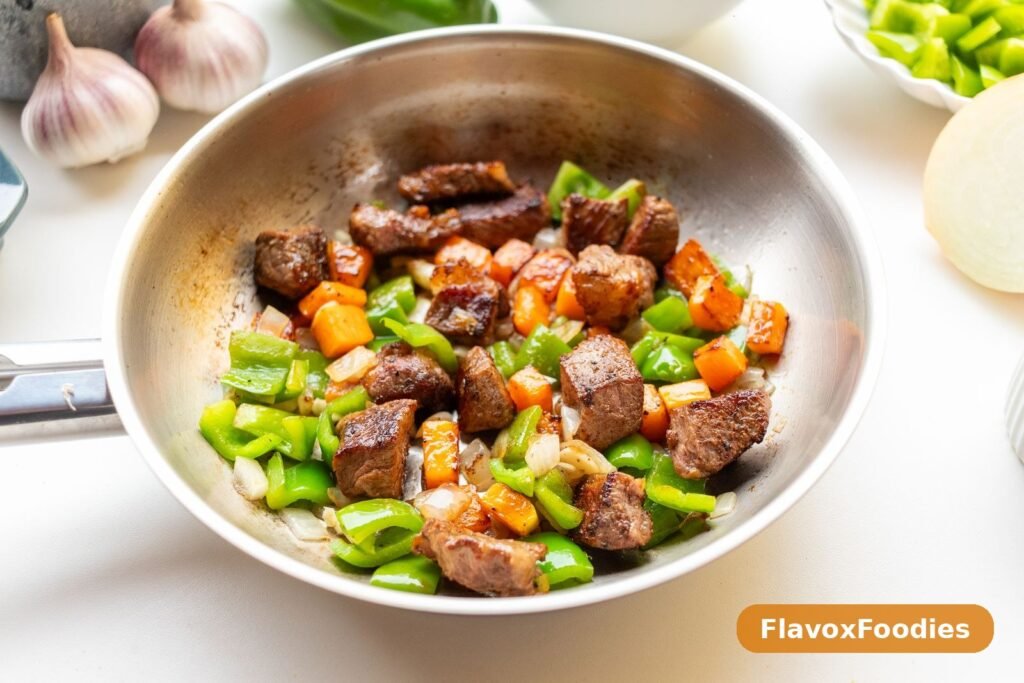

One-pan beef and vegetable stir fry is the dinner that saves the evening when you are hungry, short on time, and not in the mood for a complicated recipe. Thin strips of beef, seared quickly until they are browned at the edges and tender in the middle, a pan full of bright vegetables that stay crisp, and a glossy soy and ginger sauce that coats everything without drowning it. It is on the table in about twenty-five minutes, it uses one pan, and it tastes fresher and lighter than anything that arrives in a takeaway box.
The reason a stir fry works so well at home is that it is built around speed and heat, two things a home kitchen can absolutely deliver if you prepare first and cook second. The mistake most people make is to start cooking before they have chopped anything, and then the beef overcooks while they are still slicing a pepper. A stir fry rewards five minutes of preparation more than almost any other kind of cooking. Slice the beef, chop the vegetables, mix the sauce, and then the cooking itself takes less than ten minutes. It is a rhythm worth learning, because once you have it, you can make a stir fry out of almost anything in the fridge.
This recipe is also wonderfully flexible. The vegetables here are the ones I reach for most often — peppers, broccoli, carrots, and snap peas — because they cook at roughly the same speed, they hold their colour, and they look beautiful together. But the method does not depend on them. Use what you have, use what is in season, use what needs using up. The sauce is the constant, and it is simple: soy sauce for salt and depth, oyster sauce for richness, ginger and garlic for warmth, a little honey for balance, and cornstarch to make it glossy. If you like quick dinners built around whatever is in the freezer, our chicken recipes with frozen vegetables follow the same kind of thinking, and our easy chicken dinner with frozen vegetables is a good companion recipe for another night.
Why a Stir Fry Works in One Pan
A stir fry is, at heart, a very simple idea: cook small pieces of food very quickly, over high heat, in a little oil, moving them constantly. The high heat is what gives the beef its browned edges and the vegetables their crisp texture. If the heat is too low, the food steams instead of searing, and you end up with grey beef and soft vegetables. That is why the pan matters, and why the preparation matters. A large, heavy skillet or a wok, heated until it is properly hot, is the right tool. A small, crowded pan is the wrong one, and no amount of good ingredients will fix it.
The second reason a stir fry works in one pan is the sauce. In this recipe, the sauce is mixed in advance and added at the end, when the beef and vegetables are already cooked. It hits the hot pan, bubbles, thickens in about a minute thanks to the cornstarch, and coats everything in a glossy layer. That order — cook first, sauce last — is what keeps the vegetables crisp. If the sauce goes in too early, the vegetables sit in liquid and soften. If it goes in at the end, they stay bright and firm, and the sauce clings to them instead of pooling at the bottom of the pan.
The third reason is that a stir fry is forgiving about proportions. If you have a little more beef than the recipe says, it still works. If you have an extra pepper, add it. If you are short on broccoli, use more carrots. The sauce scales easily, the cooking times barely change, and the result is still a good dinner. For more stir fry ideas, the stir fry recipes at Serious Eats are a useful starting point. That flexibility is what makes a stir fry a genuine weeknight staple rather than a recipe you only make when you have exactly the right shopping list. It is cooking that adapts to your kitchen, not the other way around.
Ingredients You Will Need
This recipe serves four people. For the beef, you will need one pound of flank steak, sirloin, or rump steak, sliced very thinly against the grain. For the vegetables, you will need one red pepper, sliced, one yellow pepper, sliced, two cups of broccoli florets, cut small, two carrots, sliced thinly on a diagonal, and one cup of sugar snap peas. You will also need three cloves of garlic, minced, one tablespoon of fresh ginger, grated, three spring onions, sliced, and two tablespoons of vegetable oil for cooking.
For the sauce, you will need a third of a cup of low-sodium soy sauce, two tablespoons of oyster sauce, one tablespoon of honey, one tablespoon of rice vinegar, one teaspoon of sesame oil, one tablespoon of cornstarch mixed with two tablespoons of cold water, and half a teaspoon of red pepper flakes if you like a little heat. To finish, you will need a tablespoon of sesame seeds and the sliced spring onions. Serve it with steamed rice or noodles, which are not counted in the cooking time here because you can make them while you prepare the vegetables.
Choosing and slicing the beef is the most important step in this recipe, so it deserves some attention. Flank steak is my first choice because it is lean, flavoursome, and slices beautifully when it is thin. Sirloin is a good second choice, and rump steak works well too. Whatever cut you use, slice it against the grain — look for the lines running through the meat and cut across them, not along them — because that shortens the muscle fibres and makes the beef tender instead of chewy. The slices should be about a quarter of an inch thick. If the beef is difficult to slice, put it in the freezer for twenty to thirty minutes first. Partially frozen beef is much easier to cut thinly, and it is a trick that professional cooks use all the time.
A quick word on the marinade, because it makes a real difference. Toss the sliced beef with a tablespoon of soy sauce, a teaspoon of cornstarch, and a teaspoon of sesame oil, and let it sit for ten to fifteen minutes while you prepare the vegetables. This short marinade, sometimes called velveting, coats the beef in a thin layer that protects it from the high heat and keeps it tender and juicy. It takes no extra time, because you are chopping vegetables anyway, and it is the difference between beef that is tender and beef that is tough. Do not skip it if you can help it.
How to Make One-Pan Beef and Vegetable Stir Fry
Start with the preparation, because everything after that happens fast. Slice the beef and toss it in the marinade. Chop all the vegetables and keep them in separate piles, or in one large bowl if you are short on space — the peppers, broccoli, and carrots go in first, and the snap peas go in later, so keep those separate. Mince the garlic, grate the ginger, slice the spring onions, and whisk the sauce ingredients together in a small bowl, leaving the cornstarch mixture separate until the end. Have everything within arm’s reach of the stove. This is the whole secret of a good stir fry, and it takes about ten minutes.

Heat a large skillet or wok over high heat until it is very hot — you should feel the heat rising when you hold your hand a few inches above the surface. Add one tablespoon of oil and swirl it around the pan. Add half the beef in a single layer, spreading the pieces out so they are not touching. Let them sear undisturbed for about a minute, until the undersides are browned, then stir and cook for one more minute until the beef is browned on the outside but still slightly pink in the middle. Remove it to a plate. Repeat with the second half of the beef and the remaining oil. Cooking the beef in batches is essential: if you add it all at once, the pan cools down, the beef steams, and you lose the browning that gives a stir fry its flavour.
Now cook the vegetables in the same pan, still over high heat. Add the broccoli and carrots first, because they take the longest, and stir fry them for two minutes. Add the peppers and cook for two more minutes, stirring constantly. The vegetables should be bright, glossy, and still firm when you bite them. Add the garlic and ginger and cook for thirty seconds, until fragrant. Then add the snap peas and cook for one more minute. The whole vegetable stage takes about five to six minutes, and you should be stirring almost constantly, keeping everything moving so it cooks evenly and nothing burns.
Return the beef to the pan, along with any juices from the plate. Give the sauce a quick stir — the cornstarch will have settled at the bottom — and pour it over everything. Stir well and cook for one to two minutes, until the sauce bubbles, thickens, and turns glossy, coating the beef and vegetables in a shiny layer. Stir in the cornstarch mixture if the sauce needs more body, a little at a time, and let it bubble for thirty seconds after each addition. Take the pan off the heat, sprinkle over the sesame seeds and spring onions, and serve immediately over steamed rice or noodles. A stir fry waits for no one, and it is at its best in the first five minutes after it leaves the pan.
Tips for Tender Beef and Crisp Vegetables
The first tip is the one that matters most: do not overcook the beef. Beef for a stir fry is sliced thin, which means it cooks in about two minutes. If you leave it in the pan for five minutes, it will be tough, no matter how good the cut was or how well you marinated it. Cook it in batches, take it out while it is still slightly pink, and let it finish in the sauce at the end. The residual heat and the hot sauce will bring it the rest of the way without overcooking it. If you are unsure, take a piece out and taste it — it should be tender and juicy, with a browned outside and a pink centre.
The second tip is about the vegetables. Cut them to roughly the same size, so they cook at the same rate, and add them to the pan in order of cooking time: hard vegetables first, soft vegetables last. Broccoli and carrots need the most time, peppers need less, and snap peas need the least. If you add them all at once, the snap peas will be soft by the time the broccoli is done. It is a small detail, but it is the difference between a stir fry that looks and tastes vibrant and one that looks tired. Taste a piece of broccoli before you move on — it should be tender enough to bite easily, but still firm and bright green.
The third tip is about heat. A stir fry needs a hot pan, and it needs you to keep the food moving. If your pan is not hot enough, the vegetables will release water and steam, and the sauce will be thin. If you do not stir, the garlic will burn in one spot while the vegetables at the edge stay raw. Keep the heat high, keep the food moving, and do not be afraid of a little smoke — a hot wok or skillet is supposed to be hot. If your stove is not very powerful, cook in smaller batches, which keeps the pan temperature up and gives you the same result.
Variations Worth Trying
Once you know the method, you can change almost everything about this stir fry and it will still work. For a different protein, use thinly sliced chicken breast, pork tenderloin, or large shrimp — all of them cook quickly and take the same sauce beautifully. Chicken needs a couple of minutes more than beef, and you should check that it reaches a safe internal temperature; the USDA safe temperature chart is a useful reference here. Shrimp cook fastest of all, about two minutes a side, and they make the dish feel lighter. Tofu is another good option: press it well, cut it into cubes, and sear it until golden before you add the vegetables. It soaks up the sauce in a way that meat does not, and it is a satisfying choice for a meat-free night.
The vegetables are just as flexible. Use whatever is in season or in your fridge: courgettes, mushrooms, baby corn, mangetout, green beans, or cauliflower all work. Mushrooms add a deep, savoury flavour and should go in early, with the broccoli, because they need time to brown. Courgettes cook quickly and should go in with the peppers. Baby corn and mangetout are fast too, and they add a sweetness that children often like. The rule is always the same: hard vegetables first, soft vegetables last, and taste as you go. If you want a rice-bowl version of this kind of dinner, our BBQ chicken rice bowls use the same idea of a saucy protein over rice, and they are a good next recipe to try.
For a spicier version, add a tablespoon of sriracha or chilli garlic sauce to the sauce mixture, or increase the red pepper flakes to a full teaspoon. For a sweeter version, add an extra tablespoon of honey and a splash more rice vinegar — the sweet-sour balance is what makes the sauce interesting. For a nutty version, add a spoonful of peanut butter to the sauce and whisk it in well; it thickens the sauce and gives it a rich, satay-like flavour that is wonderful over noodles. And if you want to keep it simple, leave the sauce exactly as it is. It is balanced as written, and it does not need improving — only adjusting to your taste.
Serving Ideas

A beef stir fry is best served immediately, over steamed rice or noodles, in wide bowls that give you room to mix everything together. Jasmine rice is my usual choice, because its gentle fragrance suits the sauce, but plain basmati or even brown rice work well too. If you prefer noodles, cook them separately according to the packet, drain them, and either toss them into the pan with the sauce for the last minute or serve the stir fry on top of them. Egg noodles and rice noodles both work, and they turn the dish into something that feels like a proper takeaway dinner, only fresher.
For a family dinner, serve the stir fry in the pan in the middle of the table, with a big bowl of rice and a stack of bowls, and let everyone help themselves. It keeps the food hot, it keeps the washing up down, and it makes dinner feel relaxed rather than formal. Add a simple side if you like — our baked sweet potato fries are a fun, slightly unexpected partner for a stir fry, and they are popular with children — but honestly, the stir fry and rice are enough on their own. A cold drink, some extra soy sauce on the table for anyone who likes it saltier, and a small bowl of chilli sauce for the adults, and dinner is done.
If you are cooking for children, this is a good recipe to adapt rather than to change completely. Keep the red pepper flakes out, cut the vegetables a little smaller, and let the children pick their own vegetables from the pan — they are often more willing to eat something they chose themselves. The beef is tender and the sauce is sweet-savoury, which are flavours most children like. Serve it with rice and a fork, and do not worry if they eat the beef first and the vegetables second. That is still a good dinner.
Storage and Reheating
Leftover beef stir fry keeps in the refrigerator for up to three days, stored in an airtight container, with the rice stored separately. The vegetables will soften as they sit, which is unavoidable, but the flavour will still be good. To reheat, warm the stir fry gently in a skillet over medium heat with a splash of water or broth, stirring often, until it is heated through. The sauce will loosen as it warms, and a fresh sprinkle of spring onions and sesame seeds at the end makes it taste freshly made. Avoid the microwave if you can, because it heats unevenly and can make the beef tough. If you must use it, heat in short bursts at half power and stir between each burst.
Freezing is not ideal for this dish, because the vegetables lose their crisp texture when they thaw. The beef and sauce freeze reasonably well on their own for up to two months, so if you want to cook ahead, freeze the beef and sauce together and cook fresh vegetables on the night you eat it. For meal prep, a better approach is to prepare all the components in advance — slice the beef and marinate it, chop the vegetables, mix the sauce — and keep them in separate containers in the refrigerator for up to two days. Then the cooking itself takes less than ten minutes, which is the part that matters most on a busy night.
Frequently Asked Questions
What is the best cut of beef for stir fry?
Flank steak is the best choice for most people, because it is lean, flavoursome, and slices thinly without falling apart. Sirloin is a good second choice, and rump steak works well too. The cut matters less than the slicing: always slice against the grain, as thinly as you can, and marinate the beef briefly in soy sauce and cornstarch before cooking. Avoid stewing cuts like chuck or brisket, which need long, slow cooking and will be tough in a fast stir fry.
Why is my beef tough in a stir fry?
Beef usually turns tough in a stir fry for one of three reasons: it was sliced with the grain instead of against it, it was cooked for too long, or the pan was crowded and the beef steamed instead of searing. Slice against the grain, cook in small batches over high heat, and take the beef out while it is still slightly pink in the middle. The short marinade in soy sauce and cornstarch also helps, because it protects the meat from the high heat. If your beef is still tough after all of that, try a different cut — flank steak is more forgiving than most.
Can I use frozen vegetables for a stir fry?
Yes, frozen vegetables can work, but they need to be handled differently from fresh ones. Thaw them first and pat them dry, or they will release a lot of water into the pan and the stir fry will steam instead of sear. Even then, frozen vegetables will be softer than fresh ones, so they are best in a stir fry where the sauce is the star rather than the crunch of the vegetables. If you use them, add them later in the cooking process and cook them for a shorter time. Our guide to chicken recipes with frozen vegetables has more advice on cooking with frozen vegetables.
How do I stop my stir fry sauce from being too salty?
Use low-sodium soy sauce, which gives you the same flavour with much more control over the salt. Taste the sauce before you pour it into the pan, and if it tastes too salty, add a little more honey or a splash of water. Remember that the sauce reduces and concentrates as it cooks, so it will taste saltier in the pan than it does in the bowl. Serve extra soy sauce on the table for anyone who wants more, rather than adding it all to the pan.
Can I make beef stir fry without oyster sauce?
Yes, you can leave the oyster sauce out and add an extra tablespoon of soy sauce and a teaspoon of sugar instead. The sauce will be a little less rich, but it will still be good. Hoisin sauce is another substitute, although it is sweeter, so reduce the honey if you use it. If you have fish sauce, a teaspoon of it adds a similar depth, but use it sparingly — it is very strong. The most important ingredients in the sauce are the soy sauce, ginger, and garlic; the rest can be adjusted to what you have.