
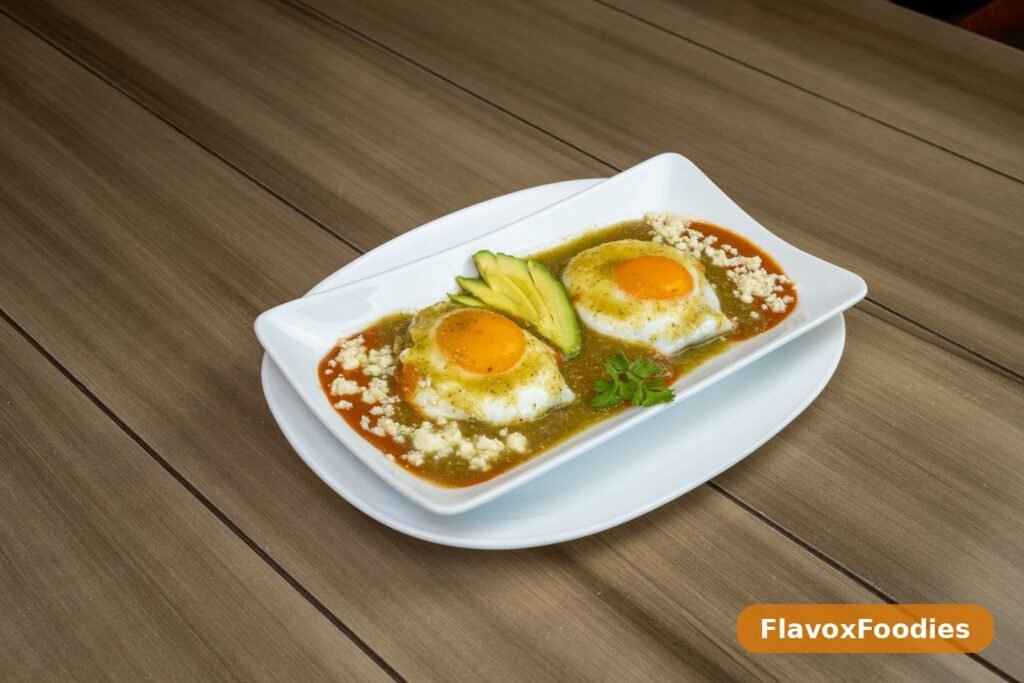

There is a particular kind of Saturday morning I plan my whole week around. Not the alarm-clock kind, and not the rushing-out-the-door kind. The kind where the kitchen is quiet, the coffee is already made, and I have a full half hour to stand at the stove and cook something properly. This one-pan huevos rancheros skillet is the breakfast I make on those mornings, and it has quietly become the most requested breakfast in my house. Not pancakes. Not French toast. Eggs, tortillas, and salsa in a hot skillet, eaten straight out of the pan with a fork and a piece of warm tortilla to mop up the yolk.
Huevos rancheros has been around far longer than any of us. It started as a ranch breakfast in Mexico, something filling and cheap that farm workers could eat before a long day. Fried eggs on corn tortillas, covered in a warm tomato-chile sauce. That was the whole idea, and honestly, it still is. The version here stays close to that original, but it pulls everything into one skillet so the tortillas crisp in the same pan the eggs cook in, and the salsa gets a chance to warm up and soften everything it touches. Less washing up, more flavour, and the whole thing lands on the table in about thirty minutes.
If you have never made huevos rancheros at home, this is the version to start with. There is nothing fussy about it. No poaching, no hollandaise, no special equipment beyond a skillet you probably already own. And if you have made it before, the one-pan method might change how you do it from now on, because the tortillas pick up a little of the oil and the salsa in the pan, and that small detail makes a real difference to the final plate.
Why One Pan Changes Everything
The classic way to make huevos rancheros involves a few separate steps. You fry the tortillas in one pan, warm the salsa in a saucepan, fry the eggs in another pan, and then you assemble everything on the plate. It works, but it also means three pans, a lot of standing around, and eggs that are cooling while you finish the rest. The skillet version folds all of that into one pan, in the right order, so every part of the dish is hot at the same time.
It starts with a little oil in a hot skillet. The tortillas go in first, just long enough to crisp at the edges and puff slightly in the middle. Then the salsa goes over the top, and the tortillas soften a little where the sauce touches them while staying crisp where it does not. The eggs crack straight into the pan, into little wells you make with the back of a spoon, and a lid goes on so the whites set while the yolks stay runny. Beans go around the edges if you like them, cheese gets scattered over the top, and the whole pan comes to the table while it is still sizzling.
There is also a practical side to it. On a weekend morning, the last thing I want is a sink full of pans before I have even eaten. One skillet, one spatula, one cutting board for the toppings. That is the whole cleanup. And when the pan goes straight to the table, people serve themselves, take what they want, and the breakfast feels less like a restaurant plate and more like something a family actually eats together.
The skillet matters a bit, too. A cast iron skillet is my first choice because it holds heat so well and gives the tortillas those crisp, slightly blistered edges. But a large nonstick or stainless steel skillet works fine as well. What matters most is size. You need enough room for four tortillas to sit in a single layer with space for the eggs, so a 12-inch skillet is about right for four servings. If your skillet is smaller, cook for two and halve the recipe rather than crowding the pan. Crowded tortillas steam instead of crisping, and that is the one thing you want to avoid.
What You Will Need
For four servings, you will need eight small corn tortillas, about six inches across. Corn, not flour, and that is not a small detail. Flour tortillas turn soft and doughy in the salsa, while corn tortillas hold their shape and get that lovely crisp-chewy texture that makes the dish. If you can only find flour tortillas, they will still taste good, but they will not be the same dish. Warm them for a few seconds first so they do not crack when they hit the pan.
You will need eight eggs, and I would buy the best ones you can afford for this. The yolk is doing a lot of the work here, running into the salsa and coating the tortilla, so a good egg with a deep orange yolk makes a visible difference. Room temperature eggs are easier to work with, so take them out of the fridge while you get everything else ready.
For the sauce, you need about two cups of salsa. Red salsa roja is the classic choice, and I usually go with a jar of good-quality salsa when I am short on time. There is no shame in that, and a decent jarred salsa, warmed up with a little cumin and a squeeze of lime, tastes very good here. If you have twenty extra minutes, a quick homemade salsa is worth it, and I will come back to that below. Either way, warm the salsa before it goes in the pan. Cold salsa straight from the fridge will cool the pan down and the eggs will take too long to set.
You will also need a can of refried beans or a can of black beans, about a cup of shredded cheese, and your toppings. The cheese is a matter of taste. Crumbled cotija is traditional and it is my favourite, salty and crumbly and it does not melt into a puddle. Shredded Monterey Jack melts beautifully if you like a gooier finish, and a mix of the two is honestly the best of both worlds. For toppings, keep it simple: diced avocado, chopped cilantro, sliced radishes, a few pickled jalapeños, and lime wedges for the table. A spoonful of sour cream or Mexican crema over the top is never a bad idea.
And a note on the beans. Refried beans are the traditional partner here, and they spread nicely around the edges of the pan. But whole black beans, warmed with a little cumin and garlic, are just as good and a little lighter. Use whichever you already have in the cupboard. If you are using canned beans, drain and rinse the black beans, or stir the refried beans with a splash of water so they loosen up and do not dry out in the pan.
How to Make It, Step by Step
Start by getting everything ready before the pan gets hot. This is a fast recipe once it starts moving, and you do not want to be chopping an onion while the tortillas are crisping. Dice the avocado, chop the cilantro, crumble the cheese, and set everything in small bowls on the counter. Warm the salsa in a small saucepan over low heat, or in the microwave for a minute, until it is steaming. Warm the beans the same way. Crack each egg into a small bowl or cup, one at a time, so you can slide them into the pan without breaking a yolk at the wrong moment.
Heat two tablespoons of oil in your skillet over medium-high heat. Not olive oil, which smokes too much at this heat, but a neutral oil like vegetable or avocado oil. When the oil shimmers, lay in the tortillas. You are not deep-frying them. You just want them to spend about a minute on each side, until the edges curl slightly and the surface has a few golden spots. Take them out and set them on a plate lined with paper towel. Leave the oil in the pan, because that is where the flavour is now.
Turn the heat down to medium. Put the tortillas back in the pan, overlapping them slightly like shingles, covering the bottom of the skillet. Spoon the warm salsa over the top, spreading it so every tortilla gets a good share, but do not drown them. You want sauce, not soup. Use the back of a spoon to make four little wells in the salsa, then slide an egg into each well. Two eggs per person, sitting on the tortillas.
Scatter the beans around the edges of the pan, in the gaps between the tortillas. Sprinkle the cheese over the eggs and the salsa. Put the lid on, turn the heat down to medium-low, and let it cook for four to five minutes. You are waiting for the whites to set all the way through while the yolks stay soft and wobbly. Lift the lid and check after four minutes. The whites should be opaque right up to the yolk, and the yolk should still jiggle when you shake the pan gently. If you like your yolks firmer, give it another minute, but do not walk away. The difference between a perfect runny yolk and a hard one is about ninety seconds.
Take the pan off the heat and let it sit for one minute with the lid on. That last minute lets the cheese finish melting and the heat settle evenly. Then scatter the avocado, cilantro, and radishes over the top, put the lime wedges around the edge, and carry the whole pan to the table. Serve it family-style and let people help themselves. A wide spatula works best for serving, sliding under a tortilla and an egg together so nothing falls apart on the way to the plate.
The Salsa Question: Roja or Verde
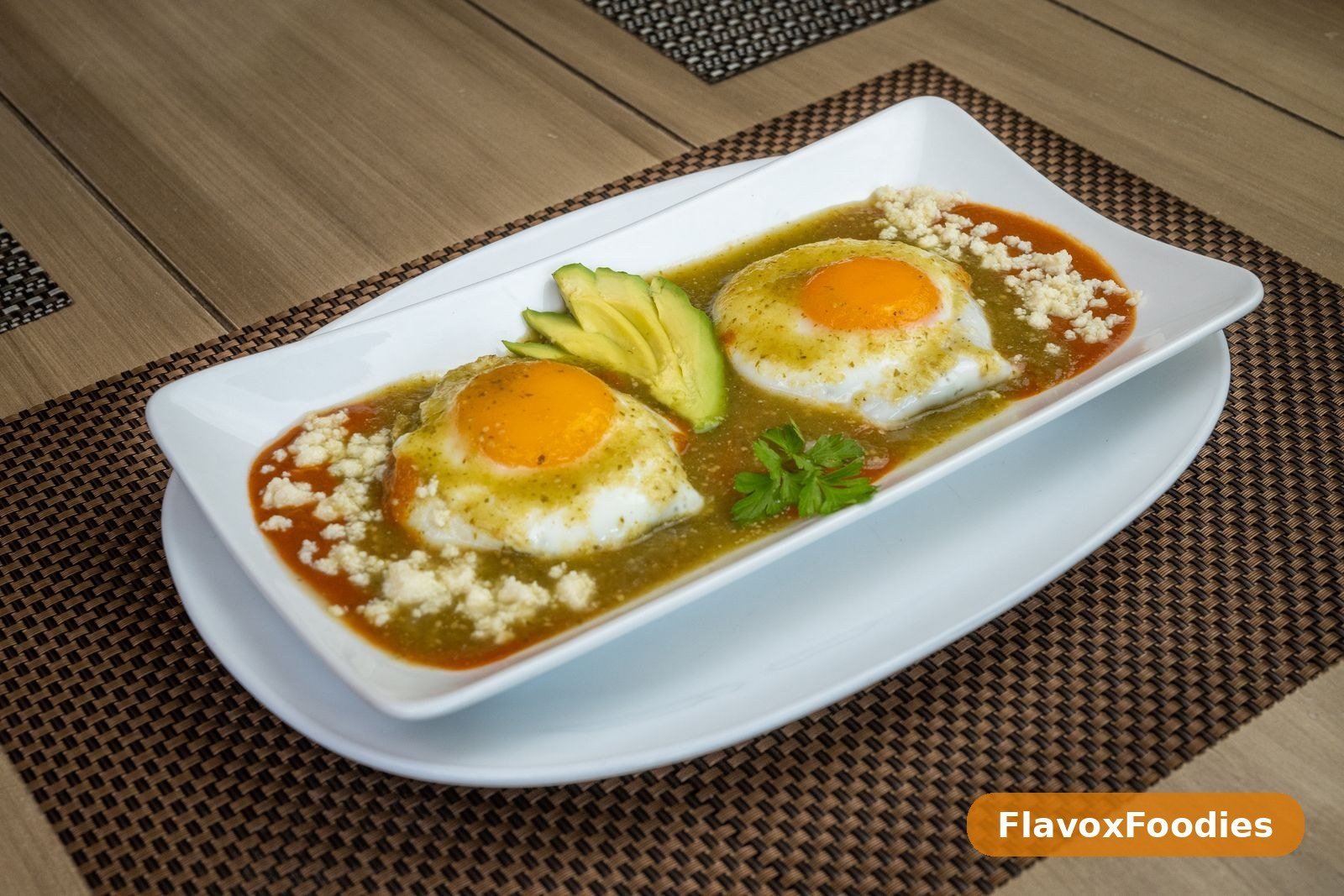
The original huevos rancheros is usually made with a red salsa, a tomato-based sauce with onion, garlic, and chile. That is the version most people know, and it is the one I make most often. But green salsa, salsa verde, made from tomatillos, is just as traditional in some parts of Mexico, and it gives the dish a completely different character. Tangy, bright, a little sharper, and it looks beautiful against the yellow yolk.
If you want to try the verde version, you can buy a jar of salsa verde and warm it the same way. Or make a quick one at home: roast a pound of tomatillos, one onion, and two jalapeños under the broiler until they are blistered and soft, then blend them with a clove of garlic, a handful of cilantro, and a squeeze of lime. It takes about fifteen minutes and it keeps in the fridge for a week.
There is also a third option, and it is the one I make when I have friends over. Huevos divorciados, the divorced eggs, which is really just this same skillet with red salsa on one side and green salsa on the other, divided down the middle by a line of refried beans. It looks impressive, it lets people pick their side, and it starts a conversation every single time. You do not need a new recipe for it. Just split the salsa in the pan, red on the left, green on the right, and run a strip of beans down the middle like a wall. If you want to read more about where the dish comes from, the history of huevos rancheros is a good place to start, and it explains how a ranch breakfast became a brunch staple.
A Quick Homemade Salsa, If You Have the Time
A jar of salsa is completely fine, and I use one most weekends. But once in a while, when the tomatoes at the market look good, I make the sauce from scratch, and it is worth the extra twenty minutes. It is not a complicated sauce. It is a pan sauce, really, made in the same skillet before the tortillas go in, so it does not even add a pan to the washing up.
Start with a little oil in the skillet over medium heat. Cook half a diced onion and two cloves of garlic until they are soft and smelling sweet, about three minutes. Add a can of diced tomatoes, or four fresh tomatoes, chopped, and a chopped chipotle pepper in adobo if you like heat. A teaspoon of cumin, half a teaspoon of smoked paprika, and a good pinch of salt. Let it simmer for ten minutes, stirring now and then, until it thickens enough to coat a spoon. Taste it, and adjust. More salt, a squeeze of lime, a little more chipotle if you want it hotter. Then spoon it out into a bowl, wipe the pan quickly, and carry on with the recipe. The sauce will taste fresher and brighter than anything from a jar, and the smoky chipotle gives it a depth that suits the eggs perfectly.
If you want a simpler shortcut, you can doctor a jarred salsa instead. Stir in a spoonful of chipotle in adobo, a pinch of cumin, and a squeeze of fresh lime, and warm it through. That takes two minutes and it lifts a jarred salsa a long way. Either way, the salsa is the backbone of the dish, so give it a little attention. It is the difference between a good breakfast and one people ask about.
The Eggs: The Part That Matters Most
Everything in this dish is simple, but the eggs are the part where timing matters, so let me be specific about them. The most common mistake is cooking them too long. The whites need to be fully set, because nobody wants a raw white, but the yolk should still be runny enough to break open and run into the salsa. That is not a small detail. The yolk is part of the sauce. When you cut into the egg and the yolk runs, it mixes with the salsa and coats the tortilla, and that is the bite that makes the dish.
The lid is what makes this work. Without a lid, the tops of the whites stay runny while the bottoms overcook, and you end up flipping the eggs or fishing them out half done. With the lid on, the steam sets the whites from above while the pan cooks them from below. If your skillet does not have a lid, a large baking tray or a sheet of foil over the top does the same job. Just be careful when you lift it, because the steam comes out hot.
There is a trick I use when I am cooking for a crowd and I want the eggs to come out even. I crack each egg into a small cup first, and I slide them into the pan one at a time, starting at the far side and working toward me. That way I know exactly where each egg is going, and if a yolk breaks in the cup, it never reaches the pan. It takes thirty seconds and it saves the whole dish from a broken yolk at the last minute.
And if someone at your table does not like runny yolks, do not make a separate breakfast. Just leave their eggs in the pan for an extra two minutes after you take the pan off the heat, with the lid on. The residual heat will firm them up without overcooking the rest. It is a small kindness that costs nothing.
What to Serve With It
This is a complete breakfast on its own, honestly. Eggs, tortillas, beans, and salsa cover every base. But if you are feeding a crowd, or you want to make it into a proper brunch spread, a few things sit happily alongside it.
Warm tortillas on the side are a must, because someone always wants an extra one to scoop up the salsa left in the pan. A bowl of rice is a good partner too, and if you want to keep the one-pan theme going, our one-pan cheesy chicken and rice shows the same skillet-first approach in a dinner version, and the method will feel familiar if you have already made this one. Fresh fruit is the other thing I always put out, something simple like sliced mango or orange segments, because the sweetness is a nice contrast to the heat and salt of the skillet.
For drinks, coffee is obvious, and a proper pot of it, not a single cup. If you want something cold, a glass of orange juice works, or agua fresca if you are feeling ambitious. A little lime and sparkling water is my own favourite, because it cleans the palate between bites and it costs almost nothing to make. And if you are putting out a bigger spread, a simple salsa on the side never hurts. Our charred corn and black bean salsa is the one I make most often for this, because the smoky corn and the black beans echo what is already in the pan.
If you are cooking for a bigger group, say eight people, do not try to squeeze it all into one pan. Make two skillets and put them both on the table. It looks generous, it cooks more evenly, and nobody has to wait for a second batch. Or cook the tortillas and salsa in one pan, keep it warm in a low oven, and fry the eggs in a second pan just before serving. The dish is flexible. The only rule is that everything should be hot at the same time.
Storing and Reheating Leftovers
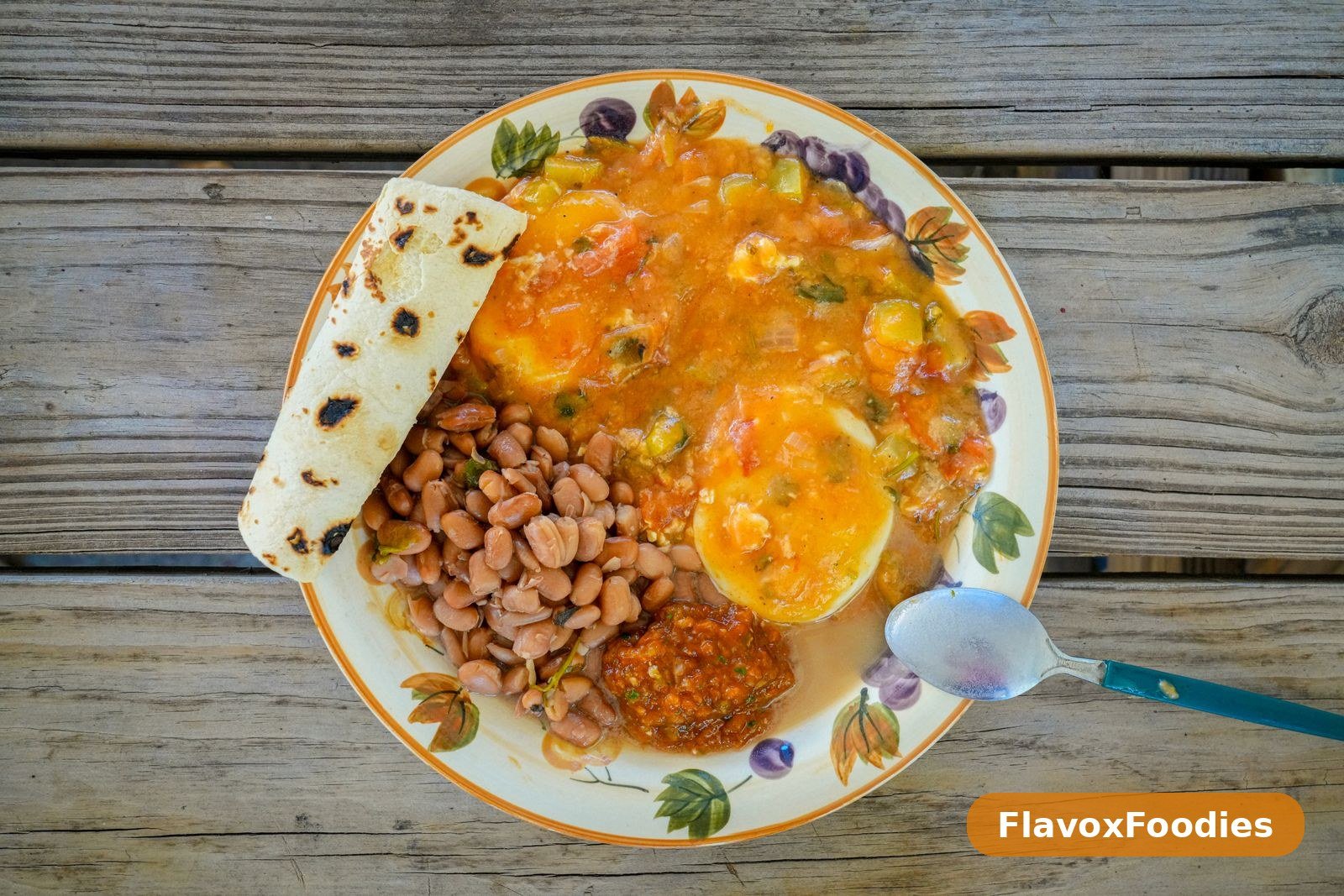
Huevos rancheros is best eaten fresh, while the tortillas still have some crispness and the yolks are runny. That is the honest truth. But if you have leftovers, they are still worth saving, as long as you store the parts separately. The salsa and beans will keep in the fridge for three or four days in sealed containers, and the tortillas keep in a bag at room temperature for a day or two. The eggs are the only part that does not reheat well, so if you know you will have leftovers, cook only as many eggs as you need and save the salsa, beans, and tortillas for tomorrow.
To reheat, warm the salsa and beans in a pan over medium heat, crisp the tortillas in a little oil, and fry a fresh egg on top. It takes five minutes and it tastes almost as good as the first time. The microwave will work in a pinch, but the tortillas will go soft, so the pan is worth it if you have the time.
You can also turn the leftovers into a different meal entirely. Warm the salsa and beans, spoon them over a tortilla, and roll it up as a breakfast burrito with a fresh egg and some cheese. Or pile them on toast with a fried egg for a quick lunch. The salsa and beans are the versatile part of this dish, and they do not have to stay in the breakfast lane.
Common Mistakes and How to Avoid Them
The first mistake is soggy tortillas, and it almost always comes from too much salsa, or salsa that goes into a cold pan. Warm the salsa, use two cups and no more, and make sure the pan is hot before the tortillas go in. The tortillas should crisp first, then soften slightly where the salsa touches them. If they go in soft and stay soft, the dish loses its texture.
The second mistake is overcooking the eggs. I have said it already, but it is worth repeating, because it is the mistake I made the first three times I cooked this. Set a timer for four minutes when the lid goes on. Check the eggs. If the whites are set and the yolks jiggle, take the pan off the heat. The eggs keep cooking for another minute in the hot pan, and that minute is enough. Trust the timer more than your eyes.
The third mistake is under-seasoning the salsa. A jarred salsa is made to be eaten cold from a bowl, and it can taste flat when it is heated. Taste the salsa after you warm it. It almost always needs a pinch more salt, a squeeze of lime, or a little cumin. Season it like you would a soup, not like a dip, because it is going to be the main flavour on the plate.
The fourth mistake is the wrong cheese. A cheese that melts into a greasy puddle, like pre-shredded cheddar with too much anti-caking powder, will make the top of the pan look messy. Crumbled cotija or queso fresco holds its shape and adds salt without turning into oil. If you only have shredded cheese, use Monterey Jack, which melts cleanly, and use a little less than you think you need. You can always add more at the table.
Make It Your Own
Once you have made this a few times, it becomes a template rather than a recipe, and that is when it gets fun. The basic structure, crisp tortilla, warm salsa, egg, cheese, is the same, but everything else can change with the season or with whatever is in your fridge.
In summer, I add sliced cherry tomatoes and fresh corn cut straight off the cob, and I use a green salsa because it feels lighter in the heat. In winter, I add a little chorizo to the pan before the tortillas, letting the fat render out and the sausage crisp up, and the whole dish gets richer and smokier. If you like heat, a diced jalapeño cooked with the salsa will give you a slow burn that builds with each bite. If you do not, leave it out entirely. The dish does not need heat to be good.
For a vegetarian version, this is already most of the way there. The beans give you plenty of protein, and the eggs do the rest. For a vegan version, you can swap the eggs for a tofu scramble, seasoned with turmeric and black salt, and skip the cheese or use a plant-based crumble. It will not be the same dish, but it will still be a good breakfast, and the structure of crisp tortilla and warm salsa carries it.
You can also change the protein. Leftover shredded chicken is a good addition, tucked under the eggs so it warms through in the salsa. So is a little cooked chorizo or bacon, crumbled over the top at the end. But I would not add too much. The eggs are the star here, and the rest of the pan should support them, not compete with them.
If you want more ideas for cooking everything in one pan, our one-pan shrimp and chorizo paella-style rice is a good next step, because it uses the same idea of building layers of flavour in a single skillet, just with rice instead of tortillas. And for a simpler weeknight version of the same idea, our one-pan chicken dinner with vegetables is the one I make most often on busy evenings. The two recipes are different dishes, but the habit is the same: one pan, good ingredients, and dinner on the table without a sink full of washing up.
If you want a second opinion on the classic version before you start, BBC Good Food’s huevos rancheros is a solid, straightforward take on the dish, and it is worth a look if you are curious how other cooks approach the same breakfast.
Frequently Asked Questions
Can I use flour tortillas instead of corn?
You can, and it will still taste good, but the texture will be different. Flour tortillas soften quickly in the salsa and can turn a little doughy, while corn tortillas stay firm and get those crisp edges that make the dish. If flour is all you have, warm the tortillas first, use a little less salsa, and serve the pan a minute sooner so they do not soak for too long.
Do I need a cast iron skillet for this?
No, a cast iron skillet is my favourite for this because it holds heat well and crisps the tortillas nicely, but a large nonstick or stainless steel skillet works fine. What matters most is the size. You need a 12-inch pan so the tortillas can sit in a single layer. If your pan is smaller, halve the recipe and cook for two people instead of crowding the pan.
Can I make huevos rancheros ahead of time?
Partly. You can make the salsa and the beans a day or two ahead and keep them in the fridge, and that saves most of the work on the morning itself. But the tortillas and the eggs should be cooked fresh. The tortillas lose their crispness if they sit in salsa, and the eggs do not reheat well. If you prep the sauce and beans ahead, the whole breakfast takes about fifteen minutes from the moment the pan gets hot.
How do I keep the yolks runny while the whites set?
Use the lid. The steam from the lid sets the whites from above while the pan cooks them from below, and that is what gives you a fully set white and a runny yolk at the same time. Keep the heat at medium-low once the lid goes on, set a timer for four minutes, and check. The yolk should jiggle when you shake the pan gently. Take the pan off the heat at that point, because the eggs keep cooking for another minute in the hot pan.
What is the difference between huevos rancheros and chilaquiles?
They are close cousins, and they share a lot of the same ingredients, but the structure is different. Huevos rancheros is fried eggs served on whole tortillas with salsa over the top, so you get a whole tortilla under each egg. Chilaquiles is made from tortilla chips, or tortillas cut into pieces, simmered in salsa until they soften, and usually served with eggs on top. Huevos rancheros keeps the tortilla whole and crisp at the edges, while chilaquiles is softer and more like a savoury breakfast casserole. Both are good, and both are worth making, but they are not the same dish.