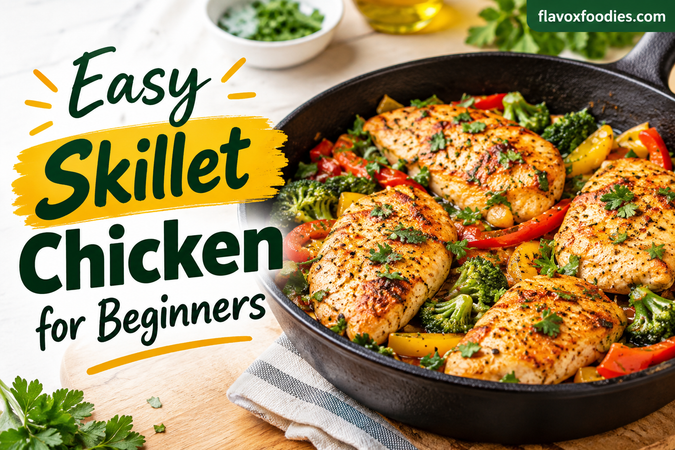
If you are new to cooking chicken, starting with a skillet is one of the easiest ways to build confidence in the kitchen. You do not need an oven, complicated equipment, or a long list of ingredients. With a good skillet, a few basic seasonings, and fresh chicken, you can make a flavorful dinner that feels much more impressive than the effort it takes.
This easy skillet chicken for beginners recipe is designed for everyday cooking. The chicken is seasoned simply, cooked in a hot skillet until golden on the outside, and finished gently so it stays juicy inside. It is a practical recipe for busy weeknights, first-time cooks, students, or anyone who wants a homemade chicken dinner without making things complicated.
The best part is that this recipe gives you a foundation you can change in many ways. Add vegetables, make a quick sauce, serve it over rice, or turn it into a simple pasta dinner. Once you understand the basic skillet method, cooking chicken becomes much less intimidating.
Why This Easy Skillet Chicken Is Great for Beginners
Chicken can sometimes seem difficult because nobody wants dry, undercooked, or burnt meat. The good news is that skillet chicken is actually quite forgiving when you follow a few simple steps.
This recipe works well for beginners because:
- It uses simple ingredients.
- You only need one skillet.
- There is no oven required.
- The seasoning is easy to customize.
- You can have dinner ready relatively quickly.
- The cooking method works with many side dishes.
- You can easily adjust the recipe for one or two people.
The key is not rushing the cooking process. Let the skillet heat properly, give the chicken enough space, and cook it until it reaches a safe internal temperature.
Ingredients You Will Need
You do not need a large pantry to make delicious skillet chicken. Here is a simple ingredient list.
Chicken
Use boneless, skinless chicken breasts for a lean and easy-to-handle option. Chicken thighs are another excellent choice, especially if you prefer darker meat with a naturally richer flavor.
If your chicken breasts are very thick, slice them horizontally or gently pound them to an even thickness. This helps them cook more evenly.
Olive Oil
A little olive oil helps prevent the chicken from sticking and encourages beautiful browning. You can also use another cooking oil that works well over medium-high heat.
Garlic Powder
Garlic powder adds flavor without requiring fresh garlic. It is particularly convenient for beginner cooks because there is no chopping involved.
Paprika
Paprika gives the chicken a warm color and mild savory flavor. Regular paprika works perfectly, although smoked paprika can be used when you want a deeper taste.
Salt and Black Pepper
These basic seasonings are essential. Do not underestimate how much flavor properly seasoned chicken can have.
Optional Seasonings
You can also add:
- Onion powder
- Italian seasoning
- Dried parsley
- Chili powder
- Lemon pepper
- A pinch of cayenne pepper
Start with a small amount until you understand how strong each seasoning is.
How to Make Easy Skillet Chicken for Beginners
The cooking process is straightforward, but paying attention to a few small details makes a big difference.
Step 1: Prepare the Chicken
Pat the chicken dry with paper towels. Removing excess moisture helps the surface brown instead of simply steaming in the skillet.
If using chicken breasts, check their thickness. A very thick piece can become brown outside before the center is fully cooked. For beginners, evenly sized chicken pieces are much easier to manage.
Step 2: Season Both Sides
Place the chicken on a clean plate and season both sides with salt, black pepper, garlic powder, and paprika.
Make sure the seasoning is spread evenly. You can gently rub it into the chicken so that every bite has flavor.
Step 3: Heat the Skillet
Place a skillet over medium to medium-high heat. Add the oil and allow it to heat for a moment.
You do not want the pan smoking heavily. If the oil begins smoking aggressively, reduce the heat.
A properly heated skillet should allow the chicken to start sizzling when it touches the surface.
Step 4: Add the Chicken
Carefully place the seasoned chicken into the skillet.
Do not immediately move it around. This is one of the most common mistakes beginners make. Let the chicken cook undisturbed for several minutes so a golden-brown crust can develop.
If you put too many pieces into the skillet at once, the temperature can drop and the chicken may release moisture instead of browning. Cook in batches if necessary.
Step 5: Flip the Chicken
Once the first side is nicely browned, turn the chicken over using tongs.
Cook the second side until browned and continue cooking until the chicken reaches a safe internal temperature.
The exact cooking time depends on the thickness of the chicken, so do not rely only on the clock.
Step 6: Check for Doneness
The safest way to check chicken is with an instant-read food thermometer. The thickest part should reach 165°F (74°C).
Avoid repeatedly cutting the chicken open to check it because this can release juices and make it harder to judge whether it is properly cooked.
Step 7: Let It Rest
Once the chicken is cooked, transfer it to a plate and let it rest for a few minutes before slicing.
This short resting period gives the juices time to settle, helping the chicken remain moist and tender.
How to Keep Skillet Chicken Juicy
Dry chicken is probably the biggest concern for anyone learning how to cook chicken. Fortunately, a few simple habits can make a noticeable difference.
First, avoid cooking very thick chicken breasts without flattening them. Uneven thickness makes cooking more difficult.
Second, do not use extremely high heat for the entire cooking process. High heat can brown the outside too quickly while the center is still raw.
Third, avoid cooking the chicken much longer than necessary. Once it reaches a safe internal temperature, remove it from the skillet.
Finally, let the chicken rest before cutting.
These simple techniques can turn ordinary chicken breasts into a much more enjoyable meal.
Easy Skillet Chicken Sauce
Once you are comfortable with basic skillet chicken, you can make a quick pan sauce using the same skillet.
After removing the cooked chicken, reduce the heat and add a small amount of chicken broth. Scrape the browned bits from the bottom of the pan with a wooden spoon.
Add a little butter, garlic, lemon juice, or dried herbs if desired.
Let the mixture simmer briefly until slightly reduced. Pour the sauce over the chicken before serving.
This is one of the easiest ways to make a beginner-friendly chicken dinner taste more special without creating a complicated recipe.
Easy Variations to Try
One of the reasons skillet chicken is so useful is that you can change the flavor without changing the cooking method.
Lemon Garlic Skillet Chicken
Add fresh lemon juice and minced garlic toward the end of cooking. A little parsley can make the finished dish taste fresh and bright.
Spicy Skillet Chicken
Add chili powder, cayenne pepper, or red pepper flakes to the seasoning mixture. Serve with rice or roasted potatoes to balance the heat.
Italian-Style Skillet Chicken
Season the chicken with Italian seasoning, garlic powder, black pepper, and paprika. Finish with a little grated Parmesan if you like.
Honey Garlic Chicken
For a sweeter variation, make a quick sauce using honey, garlic, soy sauce, and a small amount of water or chicken broth.
Add the sauce after the chicken has browned and let it simmer until it becomes slightly thick.
Creamy Skillet Chicken
After cooking the chicken, create a simple creamy sauce with butter, chicken broth, garlic, and a little cream. Return the chicken to the skillet and simmer gently.
This version works especially well with pasta or mashed potatoes.
What to Serve With Skillet Chicken
You can serve this chicken with almost anything you already have in your kitchen.
For a simple dinner, try:
- White rice
- Brown rice
- Mashed potatoes
- Roasted potatoes
- Pasta
- Steamed vegetables
- Frozen mixed vegetables
- Green beans
- Corn
- Salad
- Garlic bread
If you are cooking for beginners, rice and frozen vegetables are particularly convenient. They require very little preparation and make the chicken into a complete meal.
Easy Skillet Chicken With Vegetables
You can turn this basic recipe into a one-pan dinner by adding vegetables.
After the chicken has browned, remove it temporarily and add vegetables to the skillet. Frozen vegetables such as peas, carrots, green beans, or mixed vegetables work well.
Cook until heated through and tender. Return the chicken to the skillet and allow everything to warm together.
This is a convenient way to use ingredients already sitting in your freezer.
Fresh vegetables can also work beautifully. Bell peppers, onions, zucchini, mushrooms, and broccoli are especially good choices.
Common Mistakes Beginners Should Avoid
Learning to cook is mostly about practice, but avoiding a few common mistakes can make the process easier.
Starting With a Cold Pan
If the skillet is not hot enough, the chicken may stick and fail to brown properly.
Give the pan enough time to heat before adding the chicken.
Moving the Chicken Too Much
Constantly flipping or moving the chicken prevents a good crust from developing.
Let one side cook before turning it.
Overcrowding the Skillet
Too much chicken in one pan can lower the temperature and create steam.
Give each piece some space whenever possible.
Using Only Cooking Time
Chicken pieces vary considerably in thickness. A small piece can cook much faster than a large one.
Use an internal thermometer whenever possible.
Cutting the Chicken Immediately
Slicing the chicken as soon as it comes out of the skillet can cause juices to run onto the plate.
Let it rest for a few minutes before serving.
Can You Use Chicken Thighs?
Absolutely. Chicken thighs are an excellent option for skillet cooking, especially for beginners.
Boneless, skinless thighs are easy to season and cook. They also tend to remain juicy because they contain more fat than chicken breast.
The same basic method applies: season the chicken, heat the skillet, brown both sides, and cook until the thickest part reaches a safe temperature.
Bone-in chicken thighs can also be cooked in a skillet, but they generally require more time. A covered skillet can help cook them through after the outside has browned.
Can You Make This Recipe Ahead?
Yes. Cooked skillet chicken can be prepared ahead and stored properly in the refrigerator.
Allow the chicken to cool appropriately, place it in an airtight container, and refrigerate it. When reheating, use gentle heat so the chicken does not become unnecessarily dry.
Leftover skillet chicken can also become the starting point for another meal.
Slice it into:
- Chicken wraps
- Rice bowls
- Salads
- Sandwiches
- Pasta
- Quesadillas
- Tacos
This makes a simple skillet chicken recipe especially useful for meal planning.
How to Store Leftover Skillet Chicken
Store leftover cooked chicken in an airtight container in the refrigerator and use it within a few days.
For longer storage, cooked chicken can be frozen in a suitable freezer-safe container or bag.
When reheating frozen chicken, thaw it safely and heat it thoroughly before eating.
If you know you will use the chicken for several meals, consider slicing it before storage. Smaller portions are convenient for quick lunches and dinners.
Tips for Making the Best Easy Skillet Chicken
For reliable results every time, remember these simple tips:
- Choose chicken pieces with similar thickness.
- Pat the chicken dry before seasoning.
- Season both sides generously but reasonably.
- Preheat the skillet before adding chicken.
- Avoid overcrowding the pan.
- Let the chicken brown before flipping.
- Use medium or medium-high heat rather than extreme heat.
- Check the internal temperature.
- Let the chicken rest before slicing.
- Experiment with sauces and seasonings once you are comfortable.
These techniques are more important than using a complicated ingredient list.
Frequently Asked Questions
How long does skillet chicken take to cook?
The cooking time depends on the thickness and type of chicken. Thin boneless chicken pieces may cook relatively quickly, while thick breasts or bone-in thighs require more time. The safest method is to check the internal temperature rather than relying entirely on a timer.
Why is my skillet chicken dry?
Chicken usually becomes dry when it is cooked for too long or at excessively high heat. Unevenly thick breasts can also contribute to dry results because the thinner portions finish cooking before the thicker center.
Can I make skillet chicken without an oven?
Yes. That is one of the main advantages of this recipe. A skillet is enough to cook many types of chicken completely on the stovetop.
Can beginners use chicken thighs instead of breasts?
Yes. Chicken thighs are often very forgiving because they tend to stay juicy during cooking. Boneless, skinless thighs are particularly easy to prepare in a skillet.
What is the best skillet for chicken?
A heavy-bottomed skillet, cast-iron skillet, or quality stainless-steel pan can work well. The most important thing is learning how your particular pan heats and adjusting the temperature accordingly.
Final Thoughts
Making easy skillet chicken for beginners does not require professional cooking skills. With a handful of basic ingredients and a little patience, you can create a satisfying homemade meal right on the stovetop.
The most important lessons are simple: prepare the chicken evenly, season it well, heat your skillet properly, avoid moving the chicken too much, and always make sure it reaches a safe internal temperature.
Once you become comfortable with this basic method, you can start experimenting with lemon garlic sauces, creamy sauces, spicy seasonings, vegetables, rice, pasta, and many other combinations.
A simple skillet can do a lot more than you might expect. Start with this easy chicken recipe, practice the technique, and soon you will have a reliable dinner method you can turn to whenever you need something quick, simple, and homemade.