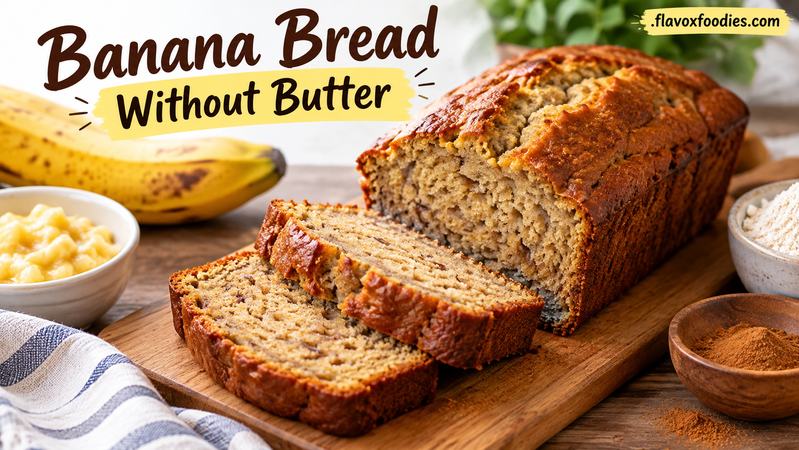
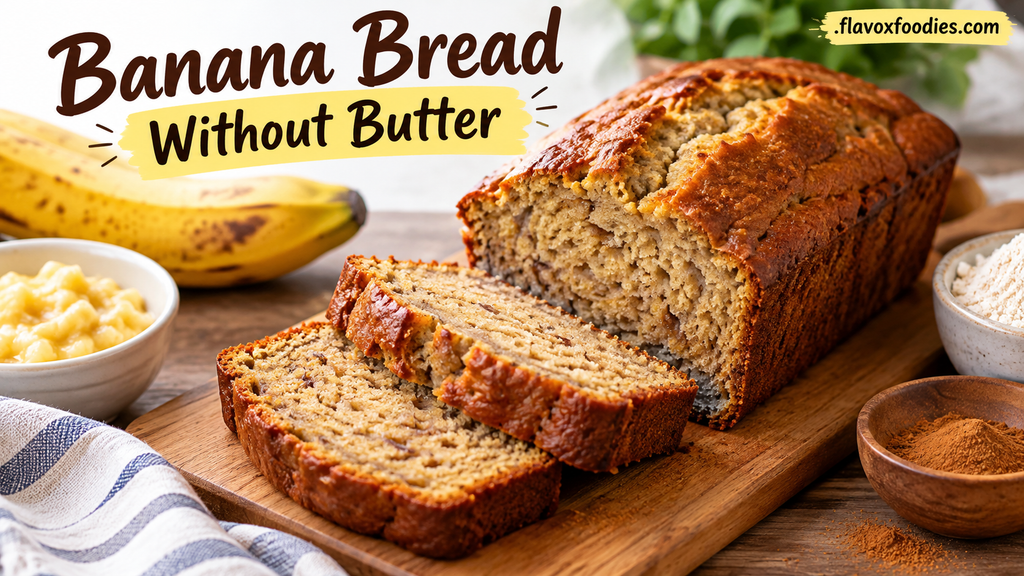
If you have a few ripe bananas sitting on your kitchen counter, this banana bread without butter is one of the easiest ways to turn them into something delicious. You do not need softened butter, a mixer, or complicated ingredients. This simple banana bread uses everyday pantry staples and still comes out soft, moist, flavorful, and perfect for breakfast or an afternoon snack.
The best part is that skipping butter does not mean giving up the tender texture that makes banana bread so good. Ripe bananas provide plenty of natural moisture and sweetness, while a small amount of neutral oil keeps the loaf soft without making it heavy.
Whether you ran out of butter, prefer baking with oil, or simply want an easy banana bread recipe, this one is worth keeping.
Why You’ll Love This Banana Bread Without Butter
There are plenty of reasons to make banana bread this way.
First, it is incredibly simple. You can mix the batter by hand in one bowl, which means fewer dishes to wash afterward. Second, the ingredients are inexpensive and easy to find. You probably already have most of them in your kitchen.
This recipe is also a great way to use overripe bananas. The softer and more spotted the bananas are, the sweeter and more flavorful your bread will usually be.
Here are a few things you can expect:
- No butter required
- Simple everyday ingredients
- Soft and moist texture
- Naturally sweet banana flavor
- Easy one-bowl preparation
- No electric mixer needed
- Great for breakfast or snacks
- Easy to customize with nuts or chocolate chips
- Delicious warm or at room temperature
Ingredients for Banana Bread Without Butter
You do not need a long ingredient list for this recipe. The following ingredients make one standard loaf.
Ripe Bananas
Use about 3 medium very ripe bananas. The bananas should have plenty of brown spots on the peel. These bananas are softer, sweeter, and more flavorful than yellow bananas.
If your bananas are very large, you may only need two and a half. Mash enough banana to give you roughly 1 to 1¼ cups.
Oil
Use ⅓ cup neutral-flavored oil, such as vegetable, canola, or sunflower oil. Oil replaces the fat that butter would normally provide and helps keep the finished banana bread moist.
You can also use melted coconut oil if you enjoy its flavor.
Sugar
About ½ cup granulated sugar works well. If your bananas are extremely ripe and sweet, you can reduce the sugar slightly.
Brown sugar can also be used if you want a deeper, slightly caramel-like flavor.
Egg
One large egg helps bind the ingredients and gives the loaf structure.
For an egg-free version, you can use a suitable egg substitute, although the texture may be slightly different.
Vanilla Extract
One teaspoon of vanilla extract adds warmth and makes the banana flavor taste even better.
All-Purpose Flour
Use 1½ cups all-purpose flour. Measure the flour carefully rather than packing it tightly into the measuring cup. Too much flour can make banana bread dry.
Baking Soda
One teaspoon of baking soda helps the loaf rise and become light.
Salt
A small amount of salt balances the sweetness and brings out the banana flavor.
Optional Add-Ins
You can leave the loaf plain or add your favorite extras. Chocolate chips, chopped walnuts, pecans, cinnamon, or shredded coconut can all work beautifully.
How to Make Banana Bread Without Butter
Making this banana bread is straightforward, even if you do not consider yourself an experienced baker.
Step 1: Prepare the Oven and Pan
Preheat your oven to 350°F (175°C).
Grease a standard 9×5-inch loaf pan or line it with parchment paper. Leaving some parchment hanging over the sides makes it easier to lift the finished bread from the pan.
Step 2: Mash the Bananas
Peel the ripe bananas and place them in a large mixing bowl.
Mash them with a fork until mostly smooth. A few small banana pieces are completely fine and can actually make the bread more enjoyable.
You do not need to puree the bananas.
Step 3: Add the Wet Ingredients
Add the oil, sugar, egg, and vanilla extract to the mashed bananas.
Whisk or stir until everything is well combined.
The mixture does not need to be perfectly smooth. Just make sure the egg is incorporated and the oil is evenly distributed.
Step 4: Add the Dry Ingredients
Add the flour, baking soda, and salt.
Using a spatula or wooden spoon, gently stir the mixture until the flour is just incorporated.
This is important: do not overmix the batter.
A few small streaks or lumps of flour are better than stirring the batter too much. Overmixing develops gluten and can make the finished banana bread dense or chewy.
Step 5: Add Optional Ingredients
If you are using chocolate chips or nuts, gently fold them into the batter.
Try not to add too many extras because they can make the loaf heavier and affect how evenly it bakes.
Step 6: Pour Into the Pan
Transfer the batter into your prepared loaf pan.
Use a spatula to spread it evenly. If you like, sprinkle a few chocolate chips or chopped nuts over the top before baking.
Step 7: Bake
Place the pan in the preheated oven and bake for approximately 50–60 minutes.
The exact baking time can vary depending on your oven, the size of your bananas, and the type of loaf pan you use.
Start checking around the 50-minute mark. Insert a toothpick into the center of the loaf. If it comes out clean or with a few moist crumbs, the bread is ready.
If you see wet batter on the toothpick, continue baking for several more minutes.
Step 8: Cool Before Slicing
Allow the banana bread to cool in the pan for about 10–15 minutes.
Then carefully remove it and place it on a wire rack to cool further.
It can be tempting to slice it immediately, especially when your kitchen smells like warm bananas and vanilla, but allowing it to cool helps the loaf set and makes slicing easier.
What Makes Banana Bread Moist Without Butter?
One of the biggest questions people have is whether banana bread can actually be moist without butter.
The answer is yes.
The secret is a combination of ripe bananas and oil.
Ripe bananas contain a significant amount of moisture, and their natural sugars become more pronounced as they ripen. Oil contributes tenderness because it coats flour proteins without adding water.
Butter contains both fat and water, while oil is almost entirely fat. This difference can give oil-based banana bread a particularly soft texture.
The key is getting the balance right. Too much oil can make the bread greasy, while too little can leave it less tender.
Tips for the Best Banana Bread Without Butter
A few simple baking tips can make a noticeable difference.
Use Very Ripe Bananas
Do not throw away bananas simply because their peels have turned brown. Those bananas are often perfect for banana bread.
Look for bananas that are soft with plenty of brown or dark spots.
Measure Flour Correctly
Adding too much flour is one of the most common reasons homemade banana bread turns out dry.
If possible, use a kitchen scale. If measuring with cups, spoon the flour into the measuring cup and level the top rather than scooping directly from a packed bag.
Do Not Overmix
Once the flour is added, stir only until the ingredients come together.
Overmixing can result in a dense loaf with a tougher texture.
Avoid Opening the Oven Too Often
Try not to repeatedly open the oven door during baking. Sudden temperature changes can interfere with rising.
Let It Cool
Cooling gives the bread time to finish setting. If you cut it while it is extremely hot, the center may seem wetter than it actually is.
Can You Make Banana Bread Without Butter and Without Oil?
Yes, but the texture will be different.
If you want banana bread without butter and without oil, you can experiment with ingredients such as unsweetened applesauce or yogurt to provide moisture.
However, oil contributes tenderness and richness, so removing both butter and oil can produce a loaf that is slightly less rich and more cake-like or moist depending on the substitute.
For the easiest butter-free banana bread, using a modest amount of neutral oil is usually the simplest approach.
Can I Use Frozen Bananas?
Absolutely.
Frozen bananas are excellent for banana bread. In fact, many people keep overripe bananas in the freezer specifically for baking.
To use them, allow the bananas to thaw completely. They may release quite a bit of liquid as they thaw. You can include that liquid in the batter, especially if your bananas were frozen without added ingredients.
Mash the thawed bananas before adding them to the recipe.
Can I Add Chocolate Chips?
Yes. Chocolate chips are one of the easiest ways to customize this banana bread.
Add about ½ cup chocolate chips to the batter. Semi-sweet chocolate works especially well because it balances the sweetness of the bananas.
You can also sprinkle a few extra chocolate chips on top before baking.
For a different flavor, try dark chocolate chips or chopped chocolate.
Can I Add Nuts?
Definitely.
Walnuts and pecans are classic choices for banana bread. Add about ½ cup chopped nuts to the batter.
For extra flavor, lightly toast the nuts before adding them. Allow them to cool first.
If you are serving the bread to others, remember to consider nut allergies.
How to Store Banana Bread
Once the banana bread has cooled completely, place it in an airtight container or wrap it tightly.
It can generally be kept at room temperature for a few days. For longer storage, refrigerate it in a sealed container.
Keep in mind that refrigeration can make baked goods feel slightly firmer. Letting a slice sit at room temperature for a little while can improve its texture.
Can You Freeze Banana Bread?
Yes, banana bread freezes very well.
For the best results, allow the loaf to cool completely. You can freeze it whole or slice it first.
If freezing slices, place parchment paper between them so you can remove individual pieces when needed. Wrap them securely and place them in a freezer-safe bag or container.
When you want a slice, let it thaw at room temperature or warm it gently.
Freezing individual slices is especially convenient for quick breakfasts and snacks.
How to Serve Banana Bread
This banana bread is delicious on its own, but there are plenty of ways to serve it.
Try a warm slice with:
- A drizzle of honey
- Peanut butter
- Almond butter
- Greek yogurt
- Fresh berries
- A little cinnamon
- Chocolate spread
- Sliced bananas
Because this recipe is already moist and flavorful, you do not need a topping to enjoy it.
A simple warm slice with coffee or tea can be enough.
Common Problems and How to Fix Them
Why Is My Banana Bread Dry?
Dry banana bread can happen when too much flour is used or when the loaf is baked for too long.
Make sure you measure your flour carefully and begin checking the bread toward the end of the recommended baking time.
Why Is My Banana Bread Dense?
Overmixing is a common cause of dense banana bread.
Once the flour goes into the bowl, stir gently and stop as soon as the ingredients are combined.
Too much banana or an incorrect amount of leavening can also affect the texture.
Why Is the Center Still Wet?
Banana bread is a thick loaf, so the center takes longer to bake than the edges.
If the top looks done but the middle is still wet, continue baking. You can loosely cover the top with foil if it is becoming too dark.
Why Did My Banana Bread Sink?
A loaf can sink for several reasons, including underbaking, too much liquid, or opening the oven door too early.
Make sure your baking soda is fresh and avoid taking the loaf out before the center has properly set.
Easy Variations
Once you have the basic recipe down, it is easy to make different versions.
Cinnamon Banana Bread
Add 1 teaspoon of ground cinnamon to the dry ingredients for a warm, cozy flavor.
Chocolate Banana Bread
Add chocolate chips or replace a small portion of the flour with unsweetened cocoa powder.
Nutty Banana Bread
Fold chopped walnuts or pecans into the batter.
Banana Bread With Oats
You can add a small amount of rolled oats for extra texture. Avoid replacing too much flour with oats unless you adjust the recipe because the texture can become heavier.
Coconut Banana Bread
Add unsweetened shredded coconut for a tropical twist.
Frequently Asked Questions
Can I make banana bread without butter?
Yes. Oil is an easy substitute for butter in banana bread and can help create a soft, moist texture.
What oil is best for banana bread?
Neutral oils such as vegetable, canola, or sunflower oil work well because they do not overpower the banana flavor.
How many bananas should I use?
About three medium ripe bananas usually work well for a standard loaf. The amount can vary depending on banana size.
Can I reduce the sugar?
Yes. Very ripe bananas are naturally sweet, so you can reduce the added sugar somewhat. Keep in mind that changing the sugar amount can slightly affect the texture and browning.
Can I use bananas that are not very ripe?
You can, but the flavor will not be as sweet or intense. Very ripe bananas are preferred because they provide more pronounced banana flavor and moisture.
Can I make this recipe in a smaller pan?
Yes, but the baking time will change. Smaller pans may require less time, while deeper or smaller loaf pans can require longer baking.
Always use the toothpick test and watch the loaf carefully.
Final Thoughts
This banana bread without butter proves that you do not need a complicated recipe or a refrigerator full of ingredients to make something delicious.
With ripe bananas, a little oil, flour, sugar, an egg, and a few basic baking ingredients, you can create a soft and comforting loaf with plenty of natural banana flavor.
It is the kind of recipe that works especially well on busy days. You can mash everything in one bowl, mix the batter by hand, put it in the oven, and let the smell of freshly baked banana bread fill the kitchen.
Whether you are trying to use up overripe bananas, ran out of butter, or simply prefer baking with oil, this easy banana bread recipe is a reliable choice. Add chocolate chips for a sweeter treat, fold in walnuts for crunch, or keep it simple and enjoy it exactly as it is.
Serve a warm slice for breakfast, pack one for an afternoon snack, or freeze a few pieces for another day. Once you see how easy banana bread without butter can be, those overripe bananas may never go to waste again.