
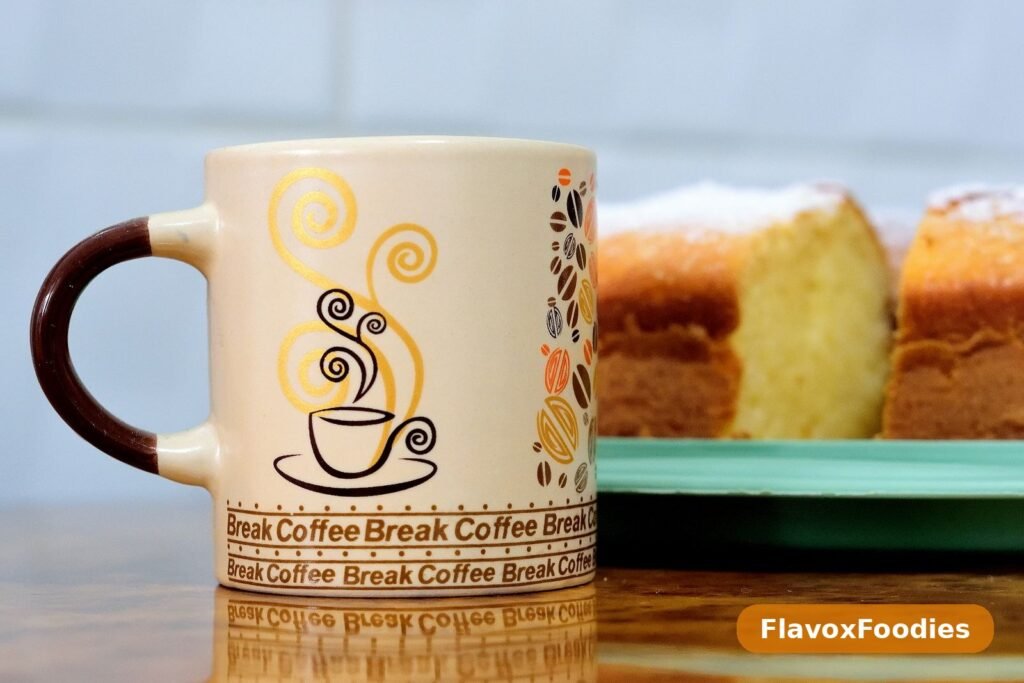

Some desserts ask you to plan ahead, preheat the oven, and wash a sink full of bowls. This one does not. An easy vanilla mug cake is the dessert you make when the craving shows up out of nowhere, usually late in the evening, when you want something warm and sweet but you do not want to bake a whole cake or leave the house. It takes about five minutes from the moment you open the cupboard to the moment you are holding a warm mug in both hands, and that speed is exactly why so many people keep coming back to it.
What makes a good mug cake is not complicated, but it is easy to get wrong. Too much flour and it turns dry and heavy. Too little liquid and it bakes unevenly, with a rubbery edge and a soft middle that never quite sets. Too much microwave time and the whole thing goes from tender to tough in about fifteen seconds. This recipe has been tested to avoid all three problems. The batter uses a balanced mix of flour, sugar, milk, oil, and egg, with just enough baking powder to lift it without making it taste bitter. The result is a small cake that is soft all the way through, lightly golden on top, and full of real vanilla flavour.
Vanilla is the star here, and it deserves a little attention. A mug cake has nowhere to hide, so the quality of the vanilla you use matters more than it would in a big layer cake covered in frosting. Pure vanilla extract gives the cake a warm, rounded sweetness that imitation vanilla cannot quite match. If you have vanilla bean paste, even half a teaspoon will make the flavour deeper and give the crumb those lovely little dark specks. Use what you have, but do not skip the vanilla altogether, because without it this is just a sweet sponge. With it, it tastes like a proper dessert.
This recipe is also wonderfully flexible. It works as a quick treat after dinner, a small birthday cake for one, a study snack, or a gentle introduction to baking for a child who wants to make something by themselves. You can eat it straight from the mug with a spoon, turn it out onto a small plate, or dress it up with whipped cream, berries, or a scoop of ice cream. Once you have made it once, you will probably memorise it, and that is the point. A good mug cake should feel like a recipe you own, not one you have to look up every time.
Why You Will Love This Vanilla Mug Cake
First, it is fast. There is no creaming butter and sugar, no waiting for the oven to preheat, and no cooling time to speak of. You stir everything in the mug, microwave it for about ninety seconds, and it is ready. On a busy evening, that matters. You get the comfort of a freshly baked cake without the commitment of a full baking session, and you only have one mug and one spoon to wash afterwards.
Second, it is a single serving, which is a feature rather than a limitation. A whole cake sitting on the counter has a way of calling to you all evening. A mug cake gives you exactly enough, and when it is gone, it is gone. That makes it a good choice when you live alone, when everyone in the house wants something different, or when you simply want a treat without leftovers to manage.
Third, the texture is genuinely good. Many mug cakes are either dense or oddly spongy, and that reputation is fair for a lot of recipes floating around online. This one stays moist because the oil coats the flour and keeps the crumb tender, the milk adds softness, and the egg gives it structure without making it heavy. If you follow the timings and resist the urge to overcook it, you will get a cake that is light, springy, and pleasant to eat with a spoon.
Finally, it is easy to make your own. The base recipe is plain vanilla, but it takes kindly to additions. A spoonful of chocolate chips, a swirl of jam, a pinch of cinnamon, or a little lemon zest all work well. You can also change the topping to suit the season, with fresh berries in summer and a drizzle of caramel or a dusting of cocoa in winter. Think of this as your starting point, and the variations later in this article as invitations rather than rules.
Ingredients for Easy Vanilla Mug Cake
You will need a microwave-safe mug that holds at least 350 ml, or about 12 ounces. A mug that is too small will overflow as the cake rises, so choose one with room to spare. A wide, straight-sided mug works better than a tall, narrow one because the cake cooks more evenly. If you are unsure, use a larger mug; a little extra space is never a problem.
- 4 tablespoons plain flour (all-purpose flour)
- 2 tablespoons granulated sugar
- 1/4 teaspoon baking powder
- Pinch of fine salt
- 3 tablespoons whole milk
- 2 tablespoons neutral oil, such as vegetable oil or light olive oil
- 1/2 teaspoon pure vanilla extract
- 1 egg yolk (or 1 tablespoon beaten whole egg, see notes below)
- Optional: 1 tablespoon chocolate chips or sprinkles
- Optional, to serve: whipped cream, vanilla ice cream, fresh berries, or icing sugar
A note on the egg: a whole egg can make a mug cake taste eggy and a little rubbery, because the white sets firmly in the microwave. Using just the yolk gives you richness and colour without that problem. If you do not want to waste a white, beat an egg in a small bowl and use one tablespoon of it in the batter, saving the rest for scrambled eggs or another recipe. Either way works, but the yolk-only version is the one I recommend if you want the softest result.
The milk matters too. Whole milk gives the best flavour and texture, but semi-skimmed milk works fine. Plant milks such as oat milk or almond milk also work, though oat milk gives a slightly softer crumb than almond milk. Avoid sweetened plant milks if you can, since the recipe already has sugar, and an extra-sweet milk can push it over the edge.
How to Make a Vanilla Mug Cake
Start by choosing your mug and giving it a light brush of oil or a quick spray of cooking spray if you plan to turn the cake out. If you are eating it from the mug, you can skip this step. Add the flour, sugar, baking powder, and salt directly to the mug and whisk them together with a fork. This dry whisking step takes ten seconds and it matters, because it spreads the baking powder evenly through the flour. If the baking powder sits in one spot, that part of the cake will rise too much and taste bitter.
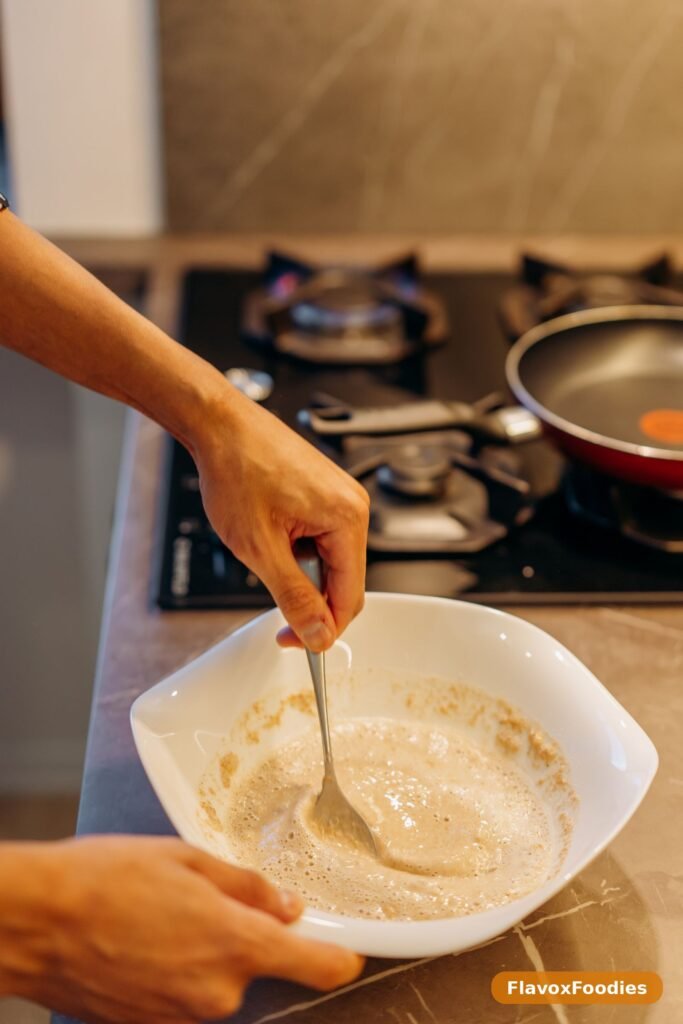
Next, add the milk, oil, vanilla extract, and egg yolk. Stir with the fork until the batter is smooth and there are no dry streaks of flour left, scraping the bottom and sides of the mug as you go. The batter should look like a thick pouring cream, smooth and glossy. Do not beat it hard or for a long time; a few gentle stirs are enough. Overmixing develops the gluten in the flour and makes the cake tough, which is the most common reason mug cakes turn out chewy.
If you are adding chocolate chips or sprinkles, fold them in now with one or two stirs. Chocolate chips will sink a little as the cake cooks, which is fine, and they will be soft and melty when you eat it. Sprinkles tend to bleed colour into the batter, so if you want them to stay bright, scatter them on top after cooking instead.
Microwave the mug on high for 80 to 90 seconds. Every microwave is different, so treat this as a guide rather than a law. In a 900-watt microwave, 85 seconds is usually about right. In a lower-powered microwave, you may need 100 seconds. The cake is done when the top looks set and springs back lightly when you touch it, and a toothpick or skewer pushed into the centre comes out with a few moist crumbs but no wet batter. If the top still looks wet and glossy, give it another 10 seconds and check again. It is better to add time in small steps than to cook it for too long in one go.
Let the cake rest for one minute before eating. This is the hardest part of the recipe, because it smells wonderful and you will want to dig in straight away. But that minute lets the centre finish setting gently and lets the temperature drop to something you can actually enjoy. The cake will also sink slightly as it cools, which is normal. A mug cake rises high in the microwave and settles as it cools, so do not worry if yours is not as tall a minute later.
Serve it as it is, or add your topping. A spoonful of whipped cream, a small scoop of vanilla ice cream, or a handful of berries all work beautifully. A light dusting of icing sugar takes two seconds and makes it look like something you would be happy to serve to a guest. If you want a little sauce, warm a spoonful of jam for ten seconds in the microwave and drizzle it over the top.
Tips for the Best Mug Cake Every Time
Measure the flour properly. Four tablespoons sounds simple, but a heaped tablespoon can add a surprising amount of extra flour, and that is enough to dry the cake out. Use level tablespoons, scraping the top flat with a knife. If you bake often, weighing the flour is even better: 30 grams is the right amount for this recipe. Small amounts matter more in a single-serving recipe than in a big cake, so a little care here pays off.
Do not overcook it. This is the single most important tip in the whole article. A mug cake continues to cook for a short while after the microwave stops, so it is better to take it out when it looks just barely done than to wait until it looks fully firm. If you are unsure, err on the side of undercooking by ten seconds. A slightly soft centre is pleasant; a dry, rubbery cake is not.
Use a mug you know. Microwaves heat unevenly, and different mugs heat differently too. A thick ceramic mug will cook more slowly than a thin one, and a dark-coloured mug can absorb more heat. The first time you make this recipe, watch it carefully and note how long your microwave and your mug need. The second time, you will get it exactly right without thinking about it.
Stir the batter well, but gently. The goal is a smooth batter with no pockets of dry flour hiding at the bottom of the mug. Use a small fork or a teaspoon and scrape around the edges. Once the batter is smooth, stop. There is no benefit to extra stirring, and there is a real cost, because overworked flour makes a tough cake.
Let it cool for a minute, as mentioned above. It is tempting to skip this, but the texture improves noticeably in that short rest. The crumb firms up just enough to hold together on the spoon, and the flavour settles too. If you add ice cream, that minute also means the ice cream will not melt into a puddle the moment it touches the cake.
Easy Variations to Try
For a chocolate chip version, fold in a tablespoon of chocolate chips and add a pinch of cocoa powder if you like a deeper flavour. For a funfetti version, stir in a tablespoon of rainbow sprinkles and add an extra drop of vanilla. For a cinnamon version, add a quarter teaspoon of ground cinnamon and a pinch of nutmeg to the dry ingredients, and serve with a drizzle of honey.
A lemon version is lovely in spring. Add a teaspoon of finely grated lemon zest to the batter and replace half a teaspoon of the milk with lemon juice. The cake will taste bright and fresh, and it pairs well with blueberries or a spoonful of lemon curd. A jam-filled version is also simple: spoon half the batter into the mug, add a teaspoon of jam in the centre, then cover with the rest of the batter. The jam melts into a warm, fruity pocket in the middle.
If you want a dairy-free version, use oat milk and check that your chocolate chips are dairy-free. The recipe already uses oil rather than butter, so it adapts easily. For a slightly richer cake, you can replace one tablespoon of the oil with melted butter, which gives a more buttery flavour. Both versions work; the oil version is a little lighter, and the butter version tastes a little more like a traditional sponge.
You can also double the recipe for two mugs. Mix the batter in a small bowl, divide it between two mugs, and microwave them one at a time. Microwaving two mugs together will cook them unevenly, so it is worth the extra ninety seconds to do them separately. This is a nice option when you want to share the moment with someone else, each with your own warm mug.
Serving Ideas

The simplest way to serve a vanilla mug cake is straight from the mug with a spoon and nothing else. It is a quiet, comforting dessert, and it does not need to be dressed up to be good. But if you are serving it to someone else, or if you want to make an ordinary evening feel a little special, a topping makes a real difference.
Whipped cream and fresh berries are the classic pairing. The cool cream against the warm cake is a lovely contrast, and the berries add colour and a little sharpness that balances the sweetness. Vanilla ice cream works in the same way, and a small scoop is enough. If you have salted caramel sauce, a thin drizzle over the top turns the mug cake into something that tastes like it came from a cafe. A spoonful of warm chocolate sauce does the same for chocolate lovers.
For a birthday, push a candle into the top and let the birthday person blow it out before eating. It is a small gesture, but it makes the single-serving cake feel like a celebration rather than a snack. For a cosy night in, serve it with a cup of tea or coffee and eat it slowly. The cake is small, so it will not last long, but that is part of its charm. If you enjoy quick single-serving bakes, you will also like our small-batch oatmeal cookies, which are just as easy to make for one or two people.
Storage and Make-Ahead Notes
A mug cake is best eaten fresh, within a few minutes of cooking. That is when the crumb is softest and the flavour is at its best. It does not store well once cooked, because the microwave texture firms up as it cools and it can become dry if you leave it for an hour. If you do have leftovers, cover the mug with cling film and eat it within a few hours, reheating it for ten seconds in the microwave if you like it warm.
What you can do ahead of time is prepare the dry ingredients. Mix the flour, sugar, baking powder, and salt in a small jar or bag, and keep it in the cupboard. When the craving hits, tip the dry mix into a mug, add the wet ingredients, and cook. This is a handy trick if you make mug cakes often, or if you want to give a mug cake kit as a small gift. Add a little tag with the wet ingredients and the cooking time, and it makes a thoughtful present for a student or a new homeowner.
Do not try to freeze a cooked mug cake. The texture does not survive freezing well, and it is so quick to make fresh that there is no real benefit. The batter also does not keep well once mixed, because the baking powder starts working as soon as it meets the liquid. Mix it and cook it straight away for the best result.
Frequently Asked Questions
Can I make this vanilla mug cake without an egg?
Yes, you can. Replace the egg yolk with two tablespoons of milk and add an extra tablespoon of flour, or use two tablespoons of plain yoghurt. The cake will be a little less rich and a little more delicate, but it will still taste good. If you often bake without eggs, you may also enjoy our small-batch cookies without eggs, which were developed to work well with no egg at all.
Why did my mug cake turn out rubbery?
The most common cause is overcooking. Even ten extra seconds in the microwave can turn a tender cake rubbery, because the egg and flour set very firmly at high heat. Try cooking it for ten seconds less next time and letting it rest for a minute. The other common cause is overmixing the batter, which develops gluten and makes the crumb tough. Stir just until the flour disappears, then stop. Using a whole egg instead of a yolk can also make the texture firmer, so try the yolk version if you have not already.
Can I make this cake in the oven instead of the microwave?
You can, but it will take longer. Pour the batter into a small oven-safe ramekin and bake at 180°C (350°F) for about 15 to 18 minutes, until the top is set and a skewer comes out clean. The texture will be a little more like a traditional sponge cake, which some people prefer. The microwave version is faster and gives a softer, more steamed texture, so it is really a matter of what you have time for. For more on how baking times and temperatures work, King Arthur Baking has clear, practical guides that explain the science in plain language.
What size mug should I use?
Use a microwave-safe mug that holds at least 350 ml, or about 12 ounces, with some room above the batter. A wide mug cooks more evenly than a tall, narrow one. Avoid mugs with metallic trim or gold decoration, because metal should never go in the microwave. If your mug is very thick ceramic, you may need an extra ten seconds of cooking time. If you like baking in small batches, our small-batch chocolate chip cookies without brown sugar are another good recipe for a small household.
Can I use self-raising flour instead of plain flour?
Yes, you can use self-raising flour and leave out the baking powder. The cake will rise well, though it may be very slightly less tender. Do not add extra baking powder on top of self-raising flour, because too much raising agent can make the cake taste bitter and collapse in the middle. If you are unsure whether your flour is self-raising, check the packet; in the United States it is often sold as self-rising flour. Safe handling matters with any baking, and the USDA food safety basics are a useful reference for storing flour and eggs properly.
How do I know when the mug cake is done?
The top should look set rather than wet and glossy, and it should spring back lightly when you press it gently with a fingertip. A toothpick pushed into the centre should come out with a few moist crumbs but no wet batter. If you see wet batter, cook for another ten seconds and check again. Remember that the cake keeps cooking for a short time after the microwave stops, so take it out when it is just done rather than waiting until it looks completely firm. For another quick single-serving dessert idea, try our air fryer chocolate chip cookies, which are ready in minutes and use the same kind of pantry ingredients.