


One-pan creamy garlic shrimp pasta is the dinner I make when I want something that feels a little bit special without turning the evening into a project. The shrimp stay pink and tender, the sauce is rich and garlicky in the best possible way, and the pasta cooks right there in the pan, soaking up flavour as it goes. There is no separate pot of water to boil, no colander to wash, and no sauce pan to scrub. One pan, about thirty minutes, and dinner is on the table.
What I love most about this recipe is how forgiving it is once you understand two small things: shrimp cook fast, and pasta needs enough liquid and a little patience. Get those two things right and the rest almost takes care of itself. The garlic goes in at the right moment so it turns sweet instead of bitter, the cream and Parmesan come together into a sauce that actually coats the pasta instead of sliding off it, and a squeeze of lemon at the end lifts the whole dish. It is the kind of meal that makes a Tuesday feel like a small occasion, and it is simple enough that you will remember it without looking at the recipe after the second time.
Shrimp pasta has a reputation for being restaurant food, something you order rather than cook, and I think that reputation is mostly about timing. People worry about overcooking the shrimp or ending up with a sauce that splits, and so they never try it at home. The truth is much kinder. Shrimp tell you when they are done — they curl into a gentle C shape and turn opaque pink — and a cream sauce made in the same pan, over gentle heat, is far more stable than a sauce made in a rush. This guide walks through the whole thing slowly: choosing the shrimp, building the sauce, cooking the pasta in the pan, and fixing the small things that can go wrong. If you enjoy easy pasta nights, our easy chicken pasta without cream is a lighter cousin of this dish, and our one-pan chicken dinner with vegetables shows the same one-pan idea with a different kind of comfort.
Why This Pasta Works So Well
The first reason this recipe works is that the pasta cooks in the sauce, not in a separate pot of water. When pasta boils in plain water, a lot of its flavour potential goes down the drain with that water. When it cooks in broth, cream, and the juices from the shrimp and garlic, every strand picks up flavour from the inside out. The starch the pasta releases as it cooks also thickens the sauce naturally, which is why the finished dish has that glossy, clinging texture you normally only get in a restaurant. You do not need a roux, you do not need to reduce a sauce for twenty minutes, and you do not need any special technique. The pasta does the thickening for you, quietly, while it cooks.
The second reason is the shrimp themselves. Shrimp are one of the fastest-cooking proteins in any kitchen, and that speed is an advantage on a busy night. They go from raw to perfectly cooked in about two minutes a side, which means the whole dish can come together in half an hour even if you are starting from scratch. They also bring a natural sweetness that plays beautifully against garlic, butter, and Parmesan. That sweet-savoury balance is what makes the dish feel indulgent without being heavy, and it is why a little lemon at the end matters so much. The acid wakes everything up and keeps the cream from feeling too rich.
The third reason is practical, and honestly it is the reason I come back to this recipe so often: there is genuinely one pan to wash. Weeknight cooking is not just about the time at the stove, it is about the time after dinner too, and a sink full of pots can undo the pleasure of a good meal. Here, the shrimp sear in the pan, the sauce builds in the same pan, and the pasta finishes in the same pan. A wooden spoon, a cutting board, and one large skillet are the whole clean-up. That matters on nights when you are tired, and it matters even more when you are cooking for people and would rather sit with them than stand at the sink.
Ingredients You Will Need
You do not need anything fancy for this pasta, and that is part of its charm. Most of the ingredients are things you probably already have, and the few you might need to buy are easy to find in any supermarket. This recipe serves four people generously, and it scales down to two without any trouble.
For the shrimp and pasta, you will need one pound of large shrimp, peeled and deveined, with the tails on or off — whichever you prefer. Tails on look prettier, tails off are easier to eat, so choose based on who is at your table. You will also need twelve ounces of pasta. Linguine and fettuccine are my favourites here because their flat shape holds the creamy sauce so well, but spaghetti, penne, or even farfalle all work. Use whatever you have in the cupboard. The sauce itself needs four tablespoons of butter, six cloves of garlic, thinly sliced, one small onion or shallot finely chopped, one teaspoon of Italian seasoning, half a teaspoon of red pepper flakes, three cups of low-sodium chicken broth, one cup of heavy cream, and three-quarters of a cup of freshly grated Parmesan cheese. Finish with the juice of half a lemon, a handful of chopped fresh parsley, and salt and black pepper to taste.
A few notes on the ingredients are worth making, because small choices here change the result more than you might expect. Freshly grated Parmesan matters: the pre-grated kind in a tub often contains anti-caking agents that stop it melting smoothly, and in a cream sauce that can mean a grainy texture instead of a silky one. Grating a block takes about a minute and it is worth it. For the shrimp, buy them peeled and deveined if you can — it saves ten minutes of fiddly work — and if you are using frozen shrimp, thaw them fully in cold water first and pat them very dry. Wet shrimp steam instead of searing, and searing is where the flavour comes from. And for the cream, heavy cream is the right choice here. Half-and-half can work in a pinch, but it is more likely to split over heat, while heavy cream stays smooth and gives the sauce its body. For more creamy inspiration, our creamy garlic chicken with spinach uses the same kind of gentle cream sauce with a completely different main ingredient.
How to Make One-Pan Creamy Garlic Shrimp Pasta
Start by getting everything ready before the pan gets hot. Pat the shrimp dry with paper towels and season them lightly with salt, pepper, and a pinch of the red pepper flakes. Slice the garlic, chop the onion, grate the Parmesan, and measure out the broth and cream. This is a fast recipe once it starts, and having everything within reach is the difference between a calm cook and a frantic one. It takes five minutes of preparation and it saves the dish.
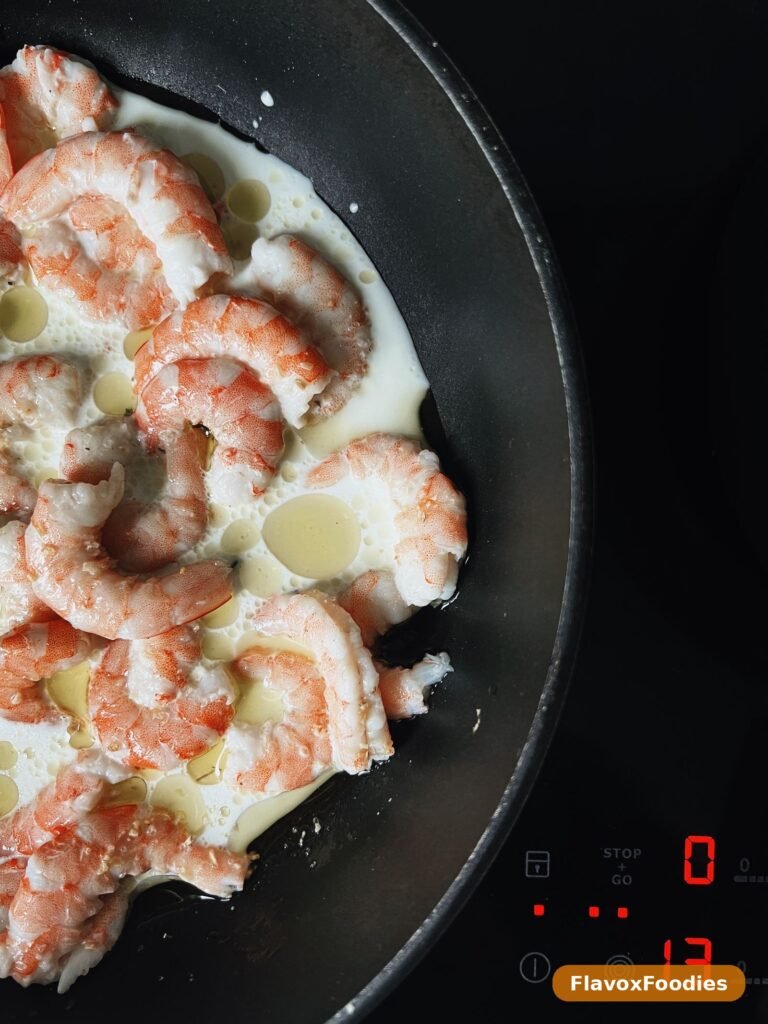
Heat a large, deep skillet over medium-high heat and melt two tablespoons of the butter. When the butter is foaming, add the shrimp in a single layer. Do not crowd the pan — if your skillet is on the small side, cook the shrimp in two batches. Let them cook undisturbed for about two minutes, until the undersides turn pink and the edges start to curl. Flip each one and cook for one more minute, then lift them out onto a plate. They will not be completely cooked through at this point, and that is exactly right: they will finish cooking later, in the sauce, and that is how they stay tender instead of turning rubbery. If you cook them all the way through now, they will be overdone by the time the pasta is ready, and there is no way back from that.
Lower the heat to medium and add the remaining two tablespoons of butter to the same pan. Add the chopped onion and cook it gently for two to three minutes, stirring now and then, until it softens and turns translucent. Then add the sliced garlic and cook for just thirty seconds, until it smells fragrant and sweet. Garlic burns quickly and burnt garlic tastes bitter, so do not walk away at this point and do not let it brown. As soon as it smells wonderful, pour in the chicken broth, scraping up the browned bits from the bottom of the pan with a wooden spoon. Those browned bits are where a lot of the flavour lives, and the broth dissolves them straight into the sauce.
Now add the pasta, the cream, the Italian seasoning, and the remaining red pepper flakes. Stir well so the pasta is mostly submerged, bring everything to a gentle simmer, then reduce the heat to medium-low and cover the pan. Cook for ten to twelve minutes, stirring every two or three minutes so the pasta does not stick together or catch on the bottom. The exact time depends on your pasta shape — check the packet and aim for the low end of its suggested time, because the pasta will keep cooking a little after you take it off the heat. If the sauce looks too thick before the pasta is done, add a splash of broth or water, a quarter of a cup at a time. If it looks too thin, leave the lid off for the last couple of minutes and let it reduce.
When the pasta is just about al dente, stir in the Parmesan a handful at a time, letting each handful melt before you add the next. This keeps the sauce smooth. Then return the shrimp to the pan, along with any juices that collected on the plate, and squeeze over the lemon juice. Stir gently for one to two minutes, just until the shrimp are opaque all the way through and curled into a soft C shape. Taste and adjust the salt and pepper, scatter over the parsley, and take the pan off the heat. Let it sit for two minutes before serving — the sauce thickens slightly as it rests, and the flavours settle together. That short rest is the difference between a good pasta and a great one.
Tips for Perfect Shrimp Every Time
The single most important tip for this recipe is to not overcook the shrimp, and the best way to avoid it is to use the visual cues rather than the clock. Shrimp are done when they turn from grey and translucent to pink and opaque, and when they curl into a loose C. If they curl into a tight O, they have gone too far. Because shrimp are small, the window between perfect and overdone is short — often less than a minute — which is why this recipe cooks them in two stages. The first sear builds flavour, and the short finish in the sauce brings them the rest of the way. If you are nervous, take one shrimp out and cut it open: it should be opaque white-pink all the way through, with no grey or translucent centre. The USDA safe temperature chart is a useful reference for cooking temperatures across different foods, and it is worth a look if you cook seafood often.
The second tip is about the pan. Use the largest, deepest skillet you own, ideally twelve inches across. A crowded pan is the enemy of a good sear, and a shallow pan makes it hard to keep the pasta submerged. If your skillet is small, cook the shrimp in two batches and add a little extra broth — the pasta will need the room. A wide pan also means the sauce reduces evenly and the pasta cooks at the same rate, instead of some pieces being done while others are still firm in the middle.
The third tip is to taste as you go, especially at the end. Parmesan is salty, broth varies in saltiness, and lemons vary in sharpness, so no recipe can tell you exactly how much salt your particular pan needs. Taste the sauce before you add the shrimp back in, add salt a pinch at a time, and finish with the lemon juice in two goes if you are unsure. If you want more pasta inspiration, the pasta recipes at Serious Eats are a good place to browse. You can always add more of anything, but you cannot take it away, and a sauce that is seasoned by tasting will always beat one seasoned by measuring alone.
Variations Worth Trying
Once you have made this pasta the classic way, it is easy to make it your own. For a lighter, greener version, stir in two big handfuls of baby spinach right before you add the shrimp back in. The spinach wilts into the sauce in about a minute and adds colour and freshness without changing the cooking time. Sun-dried tomatoes are another lovely addition: add a third of a cup, chopped, along with the garlic, and they will soften into the sauce and give it a gentle sweetness. If you like a little heat, increase the red pepper flakes to a full teaspoon, or add a pinch of Cajun seasoning to the shrimp before you sear them. That version has a smoky warmth that works surprisingly well with the cream.
You can also change the protein without changing the method. Scallops cook in almost the same way as shrimp — sear them for two minutes a side, set them aside, and finish them in the sauce — and they make the dish feel even more special for a celebration dinner. Flaked salmon, added at the very end, is another option, although it is richer and you may want a little extra lemon to balance it. For a meat version, thinly sliced chicken breast works well, but it needs longer in the pan and you should check that it reaches a safe internal temperature before serving. Our garlic butter chicken breast with mushrooms is a good place to start if chicken is more your style, and it uses the same garlic butter base you will already know from this recipe.
If you want to keep the dish dairy-free, you can swap the heavy cream for full-fat coconut milk and leave out the Parmesan, finishing instead with nutritional yeast or simply extra lemon and herbs. The result is different — lighter, with a faint coconut sweetness — but it is still delicious, and it works well for anyone who cannot eat dairy. For a gluten-free version, use your favourite gluten-free pasta and check it a couple of minutes earlier than the packet suggests, because gluten-free pasta can go from firm to soft very quickly in a one-pan sauce. Add broth a little at a time and taste often.
Serving Ideas
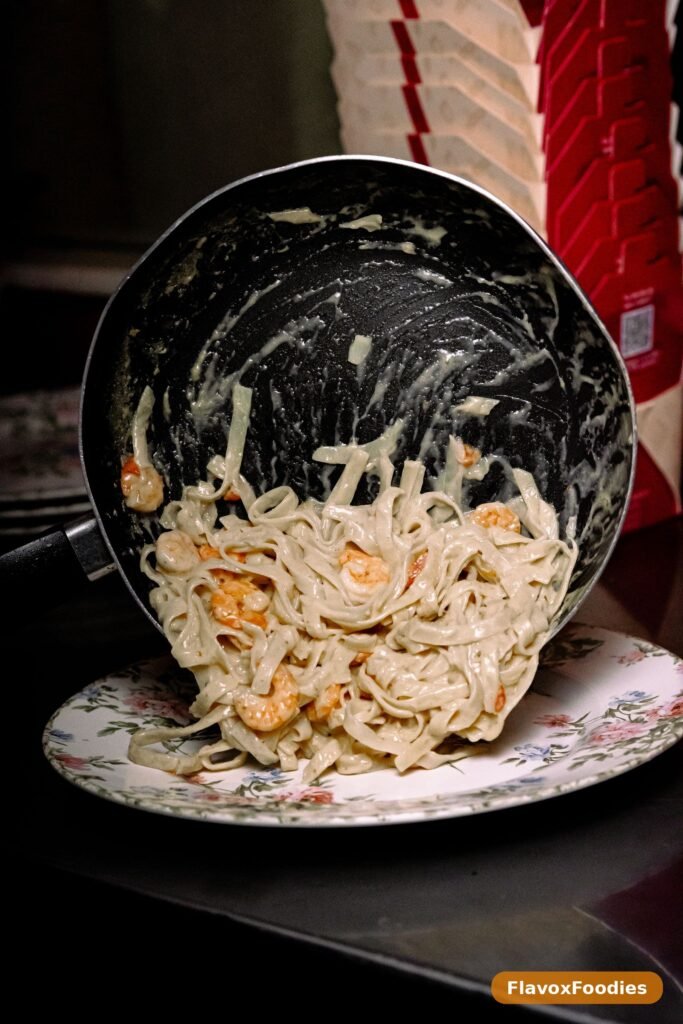
This pasta is rich enough to stand on its own, but the right side dishes turn it into a complete dinner. Crusty bread is the first thing I reach for, because there will be sauce left in the pan and it deserves to be eaten, not washed away. A simple green salad with a sharp lemon vinaigrette is the second: the freshness cuts through the cream and gives the plate some crunch. If you want something warm on the side, roasted asparagus or green beans, tossed in olive oil and salt, work beautifully, and they can cook in the oven while the pasta is on the stove.
For a dinner party, serve the pasta family-style, straight from the pan, set in the middle of the table with a big serving spoon and a bowl of extra Parmesan. People help themselves, they go back for seconds, and the pan stays warm long enough for everyone to eat at their own pace. A glass of cold white wine, something crisp and dry, is the classic pairing, and sparkling water with lemon is just as good if you are not drinking. For a weeknight, though, keep it simple: bowls, forks, bread, and a salad are all you need. The pasta is the star, and it does not need a supporting cast to shine.
If you are feeding children, this is one of the easier seafood pastas to win them over with, because the sauce is mild and the shrimp are sweet. You can leave the red pepper flakes out entirely, cut the shrimp into smaller pieces for younger children, and let everyone add their own Parmesan at the table. Some children will pick the shrimp out and eat the pasta first, and that is fine — the pasta has absorbed so much flavour from the sauce that it is a complete meal on its own.
Storage and Reheating
Leftover creamy shrimp pasta keeps in the refrigerator for up to two days, stored in an airtight container. I would not stretch it longer than that, because shrimp are delicate and the sauce thickens as it sits. To reheat, put the pasta in a skillet over low heat with a splash of milk, cream, or broth — about two tablespoons per serving — and warm it gently, stirring often, until it is heated through. The added liquid loosens the sauce back to its original silkiness. Avoid the microwave if you can, because it heats unevenly and can turn the shrimp rubbery in seconds. If the microwave is your only option, use half power and stir every thirty seconds.
Freezing is not something I recommend for this dish. Cream sauces tend to separate when they thaw, and shrimp lose their texture in the freezer in a way that chicken does not. If you know you will not eat the leftovers within two days, it is better to cook a smaller batch in the first place. The recipe halves easily: use half a pound of shrimp, six ounces of pasta, and about half of everything else, and cook it in a smaller pan. The cooking times stay almost the same, so it is a genuinely easy adjustment.
Frequently Asked Questions
Can I use frozen shrimp for this recipe?
Yes, frozen shrimp work very well, as long as you thaw them completely first. The best way is to put them in a colander under cold running water for five to ten minutes, then pat them very dry with paper towels. Never thaw shrimp in hot water or in the microwave, and never cook them from frozen in this recipe, because they will release too much water into the pan and the sauce will turn thin. Dry shrimp sear properly; wet shrimp steam.
What is the best pasta shape for creamy shrimp pasta?
Linguine and fettuccine are the best choices, because their flat, wide shape holds a creamy sauce beautifully and they cook evenly in the pan. Spaghetti is a close second. Short shapes like penne and farfalle also work, but they may need a little more broth and a minute or two longer to cook, so check them early and add liquid as needed. Avoid very small shapes like orzo, which can turn mushy in a one-pan sauce.
Why did my cream sauce split or turn grainy?
A cream sauce usually splits because the heat was too high, or because the Parmesan was added all at once instead of gradually. Keep the heat at a gentle simmer, never a hard boil, once the cream is in the pan, and stir the cheese in a handful at a time, letting each handful melt before adding the next. Pre-grated Parmesan can also cause a grainy texture, so grate a block fresh if you can. If the sauce does split, take the pan off the heat and whisk in a splash of cold cream — sometimes it comes back together.
Can I make this pasta without heavy cream?
Yes, you can use half-and-half, although the sauce will be thinner and more likely to split, so keep the heat low and stir often. Full-fat coconut milk is a good dairy-free alternative, and it gives the sauce a gentle sweetness that works well with shrimp. You can also use a mixture of milk and a tablespoon of cream cheese, whisked in at the end, which thickens the sauce without much cream. Whichever you choose, add the lemon juice last, because acid can curdle dairy if it is added too early.
How do I know when the shrimp are done?
Shrimp are done when they turn pink and opaque all the way through and curl into a loose C shape. That usually takes about two minutes per side in a hot pan, plus one to two minutes finishing in the sauce. If they curl into a tight O shape, they are overcooked. When in doubt, take one out and cut it in half — it should be white-pink and opaque in the centre, with no grey or translucent areas. Remember that shrimp keep cooking for a minute after you take them off the heat, so it is better to take them out a touch early than a touch late.